

Close Menu
    Facebook X (Twitter) Instagram
    Tuesday, April 28
    Facebook X (Twitter) LinkedIn VKontakte
    chandnitugnaitinnews
    Banner
    • Home
    • Media Presence
    • Mind & wellness
      • Cognitive Health
      • Mental Health
    • Family & Friends
      • Family
      • Friends
    • Relationship
      • Connection & Care
      • Love & Bonding
    • Well Being
      • Life
      • Positivity
    • Workplace
      • Career
      • Workplace
    • contact us
    chandnitugnaitinnews
    Home » Work from home vs office: Which is worse for your body?

    Work from home vs office: Which is worse for your body?

    Reproduced only for reference to articles mentioning our name. All rights remain with the original publisher.

    Both work-from-home and office setups have hidden physical downsides. While home setups often lead to poor posture and reduced movement, office life adds stress through long commutes and sedentary routines. Experts highlight that the real impact depends on daily habits rather than location alone.
    India tvIndia tv Workplace April 22, 20263 Mins Read1 Views
    Share Facebook Twitter Pinterest LinkedIn Tumblr Email WhatsApp
    Share
    Facebook Twitter LinkedIn Pinterest Email
    New Delhi:

    The conversation around work has mostly been about productivity, flexibility, and convenience. But there’s another question people rarely ask: what is your work setup actually doing to your body? The answer isn’t as simple as choosing one over the other. Both working from home and office life come with their own physical consequences. And neither is as harmless as it seems.

      “Your body responds to patterns, not locations. Whether you’re at home or in an office, prolonged stress and poor physical habits will eventually show up,” says Dr Chandni Tugnait, MD (A.M), psychotherapist, life alchemist, coach and healer, and founder and director of Gateway of Healing.

    The work-from-home problem: Comfort that quietly hurts

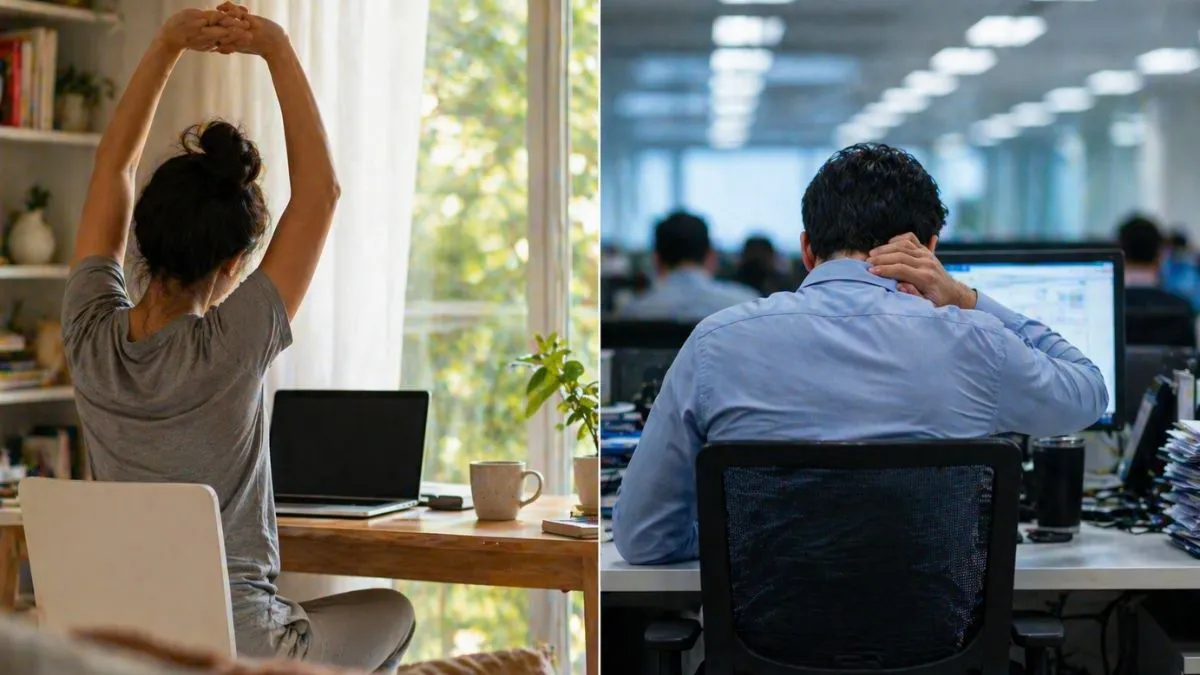
    Working from home sounds ideal until you look at how most people actually do it. Dining tables turn into desks. Sofas become workstations. Laptops sit too low, chairs offer little support, and posture takes a back seat. Over time, this adds up. Poor ergonomics can lead to neck strain, back pain, and wrist issues. But there’s another layer to it that often goes unnoticed, reduced movement. At home, your day can shrink to a few steps between your bed, desk, and kitchen. “What looks like convenience can slowly turn into physical stagnation. The lack of natural movement throughout the day impacts both physical and mental health,” Dr Tugnait explains.

    The office problem: Stress you don’t always see

    Offices, on the other hand, come with a different kind of strain. The biggest one? Commuting. In many Indian cities, daily travel can add two to three hours of sitting, noise, and stress before the workday even begins. It’s exhausting in ways that don’t always feel obvious. Long commutes are linked to higher cortisol levels, the body’s primary stress hormone. Over time, elevated cortisol can affect sleep, immunity, and even weight. “Chronic stress, even if it feels normal, can have a cumulative impact on the body. It affects everything from energy levels to emotional regulation,” says Dr Tugnait. Beyond that, office environments bring their own challenges, long hours of sitting, screen exposure, and the subtle pressure to always be “on”.

    The truth: Your body doesn’t care where you work

    Here’s where it gets real. Your body doesn’t distinguish between a bad chair at home and a bad chair at work. It doesn’t care whether your stress comes from deadlines or traffic. It only responds to what you repeatedly do. “The issue is not the location, but the lack of balance. When rest, movement, and mental recovery are missing, the body begins to show signs of strain,” Dr Tugnait adds.

    What actually makes the difference

    Instead of choosing sides, it’s more useful to look at what you can control. At home, that might mean setting up a proper workspace and building movement into your day. Small shifts matter more than big changes. The real question isn’t whether working from home is better than office life. It’s whether you’re paying attention to what your routine is doing to your body. Because the work location may be a policy decision. But how your body feels at the end of the day, that part is entirely personal.

    The articles, news features, interviews, quotes, and media content displayed on this page are the property of their respective publishers and media houses. All such materials have been sourced from publicly available online platforms where our name, views, or contributions have been referenced, quoted, or featured.

    Gateway of Healing / Dr. Chandni Tugnait / Others (as applicable) does not claim ownership over any external media content reproduced or linked here. The purpose of displaying these articles is solely for informational use, record-keeping, and to acknowledge media mentions related to our work.

    Full credit for authorship, editorial content, and intellectual property rights belongs to the original publishers, journalists, and media organizations.

    If any publisher or rights holder wishes to request modification, updated attribution, or removal of any content featured on this website, they may contact us at info@gatewayofhealing.com, and we will take appropriate action promptly.

    Read the Article on Author's webpage - CLICK HERE

      Leave a comment

      Your email address will not be published. Required fields are marked *

      emotional wellbeing Lifestyle wellbeing Mental Health Awareness Office burnout Stress and Burnout Work-Life Balance Workplace health Workplace stress
      Share. Facebook Twitter Pinterest LinkedIn Tumblr Email
      Previous ArticleThe hottest dating trend you need to be aware of is sugar dating; here’s why

      Reproduced only for reference to articles mentioning our name. All rights remain with the original publisher.

      Next Article The biggest dating mistake? Looking for love when you feel empty

      Reproduced only for reference to articles mentioning our name. All rights remain with the original publisher.

      Related Posts

      From Taboo To Trend: Expert Shares Why Young Indians Are Turning To Sugar Dating

      Reproduced only for reference to articles mentioning our name. All rights remain with the original publisher.

      April 25, 2026

      Why Being Called ‘Pookie’ Is The New Relationship Green Flag

      Reproduced only for reference to articles mentioning our name. All rights remain with the original publisher.

      April 24, 2026

      The biggest dating mistake? Looking for love when you feel empty

      Reproduced only for reference to articles mentioning our name. All rights remain with the original publisher.

      April 22, 2026

      Comments are closed.

      Archives
      Recent Posts
      • From Taboo To Trend: Expert Shares Why Young Indians Are Turning To Sugar Dating

        Reproduced only for reference to articles mentioning our name. All rights remain with the original publisher.

        April 25, 2026
      • Why Being Called ‘Pookie’ Is The New Relationship Green Flag

        Reproduced only for reference to articles mentioning our name. All rights remain with the original publisher.

        April 24, 2026
      • The biggest dating mistake? Looking for love when you feel empty

        Reproduced only for reference to articles mentioning our name. All rights remain with the original publisher.

        April 22, 2026
      • Work from home vs office: Which is worse for your body?

        Reproduced only for reference to articles mentioning our name. All rights remain with the original publisher.

        April 22, 2026
      • The hottest dating trend you need to be aware of is sugar dating; here’s why

        Reproduced only for reference to articles mentioning our name. All rights remain with the original publisher.

        April 21, 2026
      Dr. Chandni Tugnait is the founder of Gateway of Healing, a TEDx speaker, Relationship Expert – Tinder India, NeuroEnergetic Transformation Coach, Psychotherapist, Life Coach, Business Coach, NLP Expert, and Healer. Over the past 15 years, she has transformed lives of more than 50,000 individuals through her work. Featured in over 500 leading media publications, Dr. Chandni is recognized for her expertise in mental health, personal growth, and relationships. Her mission is to empower people to achieve success and well-being through the alignment of energy, mindset and action.
      About

      This website includes recreated content derived from Dr. Chandni’s media features. All original rights & credits belong to the respective publication or media house.

      Facebook X (Twitter) Instagram YouTube LinkedIn
      Copyright © 2025 . Designed by Redcube Digital Media Pvt. Ltd, . This website includes recreated content derived from Dr. Chandni’s media features. All original rights & credits belong to the respective publication or media house.

      Type above and press Enter to search. Press Esc to cancel.