

Close Menu
    Facebook X (Twitter) Instagram
    Friday, October 16
    Facebook X (Twitter) LinkedIn VKontakte
    chandnitugnaitinnews
    Banner
    • Home
    • Media Presence
    • Mind & wellness
      • Cognitive Health
      • Mental Health
    • Family & Friends
      • Family
      • Friends
    • Relationship
      • Connection & Care
      • Love & Bonding
    • Well Being
      • Life
      • Positivity
    • Workplace
      • Career
      • Workplace
    • contact us
    chandnitugnaitinnews
    Home » Why Does Anxiety Feel Worse at Night? A Psychotherapist Explains

    Why Does Anxiety Feel Worse at Night? A Psychotherapist Explains

    Reproduced only for reference to articles mentioning our name. All rights remain with the original publisher.

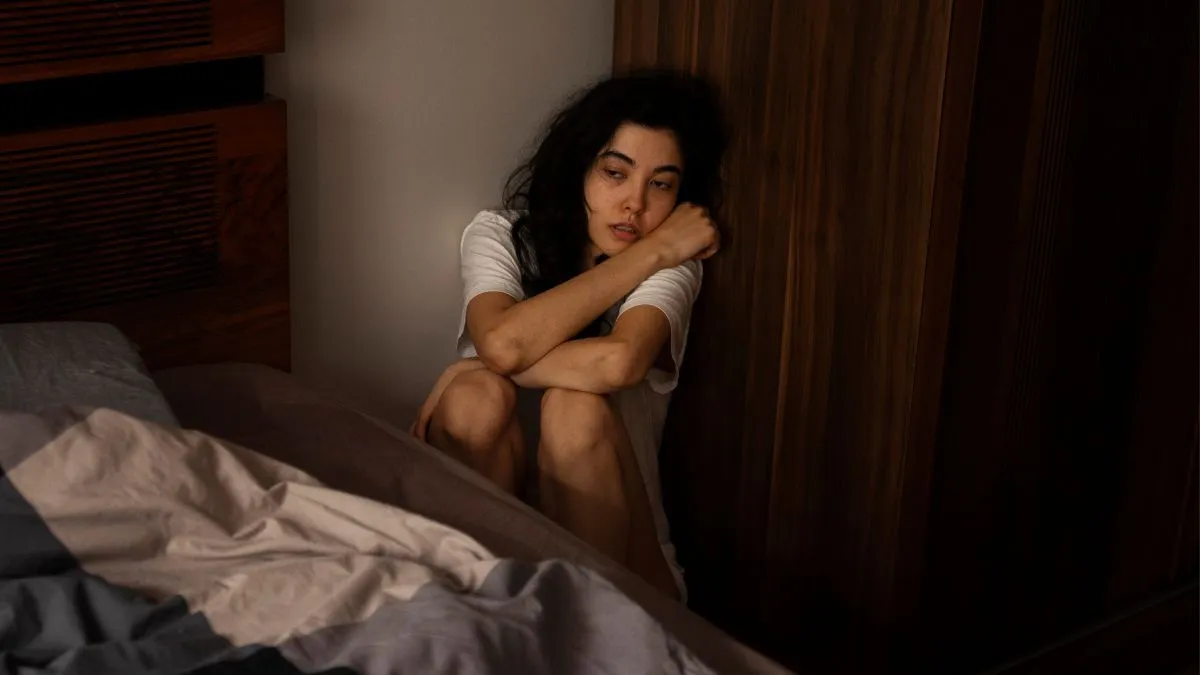
    Have you felt more anxious at night compared to the day? You are not alone. According to a psychotherapist, there is science behind why anxiety worsens at night. To know more, read this article.
    chandnitugnaitinnewschandnitugnaitinnews Mental Health August 8, 20265 Mins Read2 Views
    Share Facebook Twitter Pinterest LinkedIn Tumblr Email WhatsApp
    Share
    Facebook Twitter LinkedIn Pinterest Email
    If you’ve ever noticed that your anxiety seems to increase significantly the moment you get into bed, you’re not imagining it. For a huge number of people, nighttime is when anxious thoughts feel loudest, most persistent, and hardest to reason with. There are some reasons why this happens, and understanding them can make the experience feel considerably less overwhelming.

    Why Anxiety Feels Worse at Night

    To understand potential reasons, we spoke to Dr Chandni Tugnait, Psychotherapist, Founder and Director of Gateway of Healing, who explained everything in simple terms.

    Distractions Disappear at Night

    One of the most prominent reasons is the calm nighttime environment. At bedtime, our surroundings are often quiet and cozy, helping relax the brain. However, in people with anxiety issues, this works the opposite way.
    During the day, there’s usually enough happening around you to keep the mind at least partially occupied. Work, conversations, tasks, movement, all of it gives the brain something to focus on. At night, all of that fades away. The room goes quiet, the phone gets put down, and suddenly nothing is standing between you and every thought your mind has been quietly storing up throughout the day.
    Anxiety doesn’t get worse at night so much as it finally gets the spotlight.

    The Body Is Tired But The Mind Isn’t

    After a busy and hectic day, the body gets tired, but that doesn’t mean your mind is tired too. A body that’s ready to sleep and a mind that’s still running through the day’s events, tomorrow’s schedule, and a handful of worst-case scenarios is a very common combination, and a very frustrating one.
    The contrast between how tired the body feels and how activated the mind is makes the anxiety feel even more defined. This can also impact yourmental health over time.

    Cortisol Levels Drop In The Evening

    Cortisol, the hormone that helps regulate stress, naturally decreases in the evening as part of the body’s wind-down process. “For people with anxiety, this drop can actually make anxious feelings more noticeable rather than less, because the physiological buffer that was helping manage them through the day is no longer as present,” shares Dr Tugnait.

    Unresolved Thoughts From The Day Surface

    Anything that was pushed aside, avoided, or simply didn’t get resolved during the day tends to resurface at night when the mind finally has space to wander. It’s not that new problems appear after dark. It’s that the ones already there finally get attention.

    Daytime Anxiety vs Nighttime Anxiety

    If you think symptoms of anxiety are the same irrespective of the time of the day, you are wrong. Here is a table to help you understand how these two are different in terms of triggers, symptoms, and management techniques.
    Dimension Daytime Anxiety Nighttime Anxiety
    Primary Triggers External and Environmental: Work deadlines, social interactions, commuting, financial tasks, news, or packed schedules. Internal and Sensory: Silence, dark/quiet environments, lack of distraction, late caffeine/alcohol, or fear of insomnia.
    Cognitive Experience Focused on anticipation- worrying about upcoming events, tasks, conversations, or managing daily responsibilities. Focused on rumination – replay of past events, ‘worst-case scenario’ loops, existential thoughts, or panic about not getting enough sleep.
    Physical Symptoms Muscle tension, rapid heartbeat during tasks, restlessness, fidgeting, irritability, or tension headaches. Sudden adrenaline surges, night sweats, racing pulse while lying flat, chest tightness, or waking up with a jolt.
    Somatic Awareness Lower interoceptive focus (body signals are masked by daily tasks and environmental noise). High interoceptive focus (hyper-awareness of one’s own heartbeat, pulse, or shallow breathing in a quiet room).
    Impact on Functioning Impairs productivity, focus, decision-making, social engagement, and patience. Disruption of sleep cycles, daytime fatigue, disrupted melatonin/cortisol balance, and dread of bedtime.
    Immediate Coping Tools Box Breathing: 4s in, 4s hold, 4s out, 4s hold; 5-4-3-2-1 Sensory Grounding: Engaging external senses; Action-Oriented Breaks such as short walks or stepping away from screens. The 20-Minute Rule: Get out of bed if unable to sleep and reset in a dimly lit room; Two quick inhales and a long slow exhale; Cognitive Offloading or ‘Brain dump’ journalling before bed.
    Long-Term Preventive Strategies Task prioritisation, setting boundaries at work/home, structured breaks, and exposure therapy.  Strict sleep hygiene, dimming lights 1-2 hours before bed, eliminating screen time, and avoiding late-night heavy meals.

    How To Prevent and Overcome Night Anxiety

    If you are someone who experiences this often, here are some suggestions by Dr Tugnait:
    • Building a proper wind-down routine that gradually signals to the nervous system that the day is ending can make a major difference.
    • Keep one hour before bed free from screens, difficult conversations, and anything that requires active problem-solving. This gives the mind a chance to settle rather than stay switched on until the moment you close your eyes.
    • If you frequently get nighttime anxiety attacks, consult a professional for support.
    • Doing meditation or mindfulness exercises is also helpful in easing stress and lowering cortisol levels.
    Final Word Anxiety can worsen at night due to various factors. Practicing mindfulness, preventing triggers, and seeking professional help can effectively lower anxiety. If you often experience nighttime anxiety, make sure to consult an expert for the right guidance.

    FAQ

    • How long can anxiety attack symptoms last?

      The symptoms of an anxiety attack may last from a few minutes to an hour, varying from person to person. There are different phases of an anxiety attack.
    • What is the worst habit for managing anxiety?

      Avoidance or ignorance is the worst habit for people with anxiety issues. Instead of reducing, this can worsen the symptoms.

    The articles, news features, interviews, quotes, and media content displayed on this page are the property of their respective publishers and media houses. All such materials have been sourced from publicly available online platforms where our name, views, or contributions have been referenced, quoted, or featured.

    Gateway of Healing / Dr. Chandni Tugnait / Others (as applicable) does not claim ownership over any external media content reproduced or linked here. The purpose of displaying these articles is solely for informational use, record-keeping, and to acknowledge media mentions related to our work.

    Full credit for authorship, editorial content, and intellectual property rights belongs to the original publishers, journalists, and media organizations.

    If any publisher or rights holder wishes to request modification, updated attribution, or removal of any content featured on this website, they may contact us at info@gatewayofhealing.com, and we will take appropriate action promptly.

    Read the Article on Author's webpage - CLICK HERE

      Leave a comment

      Your email address will not be published. Required fields are marked *

      Anxiety and stress Anxiety management emotional wellbeing Mental Health Mental wellness Nighttime Anxiety Sleep and Anxiety Stress Management
      Share. Facebook Twitter Pinterest LinkedIn Tumblr Email
      Previous Articleरिश्ते में झगड़ों से ज्यादा नुकसान पहुंचाती हैं ये 5 गलतियां, जानें कड़वाहट की असली वजह

      Reproduced only for reference to articles mentioning our name. All rights remain with the original publisher.

      Next Article 10 Physical Symptoms of Anxiety That People Mistake for Other Illnesses

      Reproduced only for reference to articles mentioning our name. All rights remain with the original publisher.

      Related Posts

      From concert tickets to weekend getaways: Why young indians are spending more on experiences than things

      Reproduced only for reference to articles mentioning our name. All rights remain with the original publisher.

      October 12, 2026

      Why do we feel awkward when someone compliments us? Psychotherapist explains why we struggle to accept praise

      Reproduced only for reference to articles mentioning our name. All rights remain with the original publisher.

      October 11, 2026

      Workplace to brand culture: Can employees’ mental health become part of a company’s public identity?

      Reproduced only for reference to articles mentioning our name. All rights remain with the original publisher.

      October 11, 2026

      Comments are closed.

      Archives
      Recent Posts
      • From concert tickets to weekend getaways: Why young indians are spending more on experiences than things

        Reproduced only for reference to articles mentioning our name. All rights remain with the original publisher.

        October 12, 2026
      • Why do we feel awkward when someone compliments us? Psychotherapist explains why we struggle to accept praise

        Reproduced only for reference to articles mentioning our name. All rights remain with the original publisher.

        October 11, 2026
      • Workplace to brand culture: Can employees’ mental health become part of a company’s public identity?

        Reproduced only for reference to articles mentioning our name. All rights remain with the original publisher.

        October 11, 2026
      • How Beauty Advertising Influences Body Image: Dr Chandni Tugnait Explains Hidden Cost Of Chasing Perfection

        Reproduced only for reference to articles mentioning our name. All rights remain with the original publisher.

        October 11, 2026
      • Why has being busy become a status symbol? Psychotherapist explains our obsession with staying productive

        Reproduced only for reference to articles mentioning our name. All rights remain with the original publisher.

        October 10, 2026
      Dr. Chandni Tugnait is the founder of Gateway of Healing, a TEDx speaker, Relationship Expert – Tinder India, NeuroEnergetic Transformation Coach, Psychotherapist, Life Coach, Business Coach, NLP Expert, and Healer. Over the past 15 years, she has transformed lives of more than 50,000 individuals through her work. Featured in over 500 leading media publications, Dr. Chandni is recognized for her expertise in mental health, personal growth, and relationships. Her mission is to empower people to achieve success and well-being through the alignment of energy, mindset and action.
      About

      This website includes recreated content derived from Dr. Chandni’s media features. All original rights & credits belong to the respective publication or media house.

      Facebook X (Twitter) Instagram YouTube LinkedIn
      Copyright © 2026 . Designed by Redcube Digital Media Pvt. Ltd, . This website includes recreated content derived from Dr. Chandni’s media features. All original rights & credits belong to the respective publication or media house.

      Type above and press Enter to search. Press Esc to cancel.