


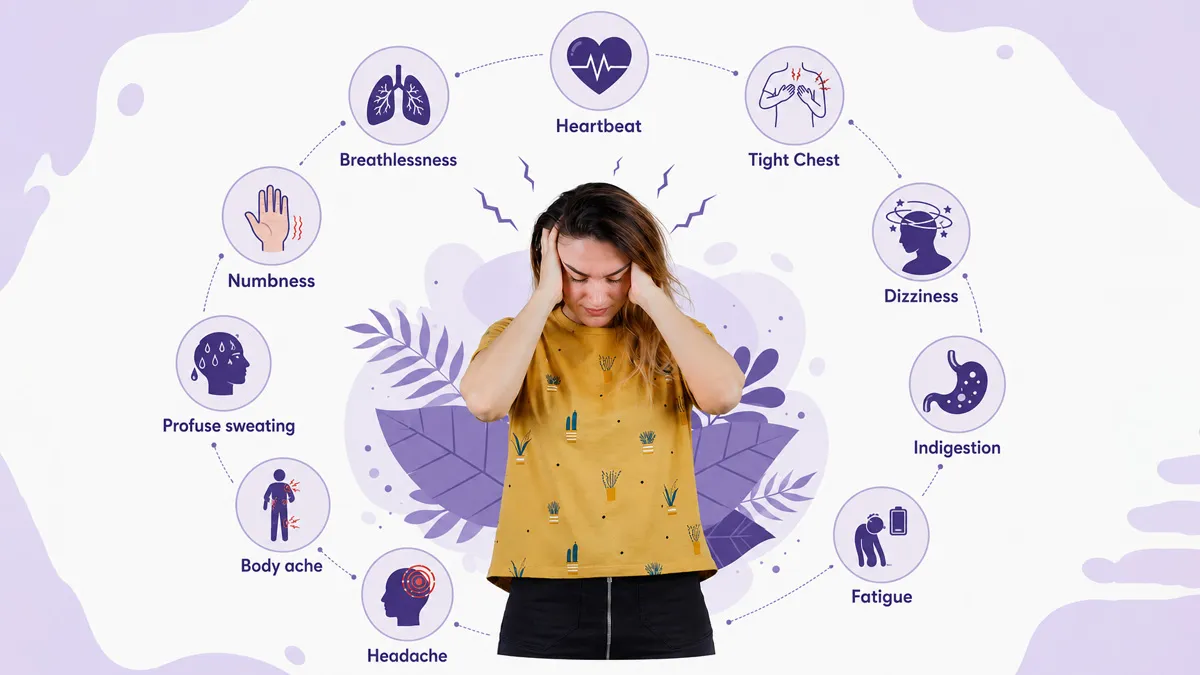
1. Racing Heart
According to the Cleveland Clinic, a suddenly fast or pounding heartbeat is one of the most common physical symptoms of anxiety, and also one of the most alarming. It’s easy to assume something is wrong with your heart, but anxiety activates the nervous system in a way that directly affects heart rate.2. Shortness of Breath
Anxiety can make breathing feel effortful or shallow, sometimes creating the sensation that you can’t get enough air. “As a clinician, I have seen a lot of patients who often mistake anxiety for asthma or a respiratory problem, especially when it comes on suddenly,” shares Dr Tugnait.3. Chest Tightness
A heavy or constricted feeling in the chest is another symptom that frequently sends people to a cardiologist first. In the absence of any cardiac issue, chronic chest tightness is often anxiety expressing itself physically.4. Digestive Problems
5. Dizziness
Feeling lightheaded or unsteady, particularly in stressful situations, is a very common anxiety symptom that gets attributed to everything from low blood pressure to inner ear problems, according to a study published in the journal ‘Life’.6. Headaches
Tension headaches that sit across the forehead or at the back of the neck are frequently linked to anxiety, particularly the kind of chronic, low-level anxiety that keeps the body in a state of constant mild tension.7. Muscle Tension and Pain
Anxiety keeps the muscles in a state of readiness for longer than they’re designed to sustain, which leads to persistent aching, stiffness, and soreness, particularly around the neck, shoulders, and jaw.8. Fatigue
“Running a stress response continuously is genuinely exhausting, and a lot of people with anxiety feel tired in a way that sleep doesn’t fully fix. This often gets mistaken for thyroid issues or anaemia,” shares Dr Tugnait.9. Sweating
Unexplained sweating, particularly on the palms or face, is a direct physical response to anxiety that can feel embarrassing and confusing when there’s no obvious reason for it.10. Tingling or numbness
When To See a Doctor
If you experience these symptoms, it is better to consult a doctor to confirm the diagnosis. If it is due to anxiety, you must undergo a clinical course for anxiety management. While the right treatment may vary as per the case, it might include:- Medicines to ease symptoms
- Anti-anxiety medicines to manage anxiety attacks
- Mindfulness techniques
- Alternative therapies for anxiety relief
FAQ
-
What weird physical symptoms can anxiety cause?
In some people, anxiety can cause unusual symptoms like muscle twitching, a lump in the throat, or a strange tingling sensation. -
What is the rarest form of anxiety?
Selective mutism is the rarest form of anxiety, occurring in less than 1% of people, primarily young children.
The articles, news features, interviews, quotes, and media content displayed on this page are the property of their respective publishers and media houses. All such materials have been sourced from publicly available online platforms where our name, views, or contributions have been referenced, quoted, or featured.
Gateway of Healing / Dr. Chandni Tugnait / Others (as applicable) does not claim ownership over any external media content reproduced or linked here. The purpose of displaying these articles is solely for informational use, record-keeping, and to acknowledge media mentions related to our work.
Full credit for authorship, editorial content, and intellectual property rights belongs to the original publishers, journalists, and media organizations.
If any publisher or rights holder wishes to request modification, updated attribution, or removal of any content featured on this website, they may contact us at info@gatewayofhealing.com, and we will take appropriate action promptly.
Read the Article on Author's webpage - CLICK HERE