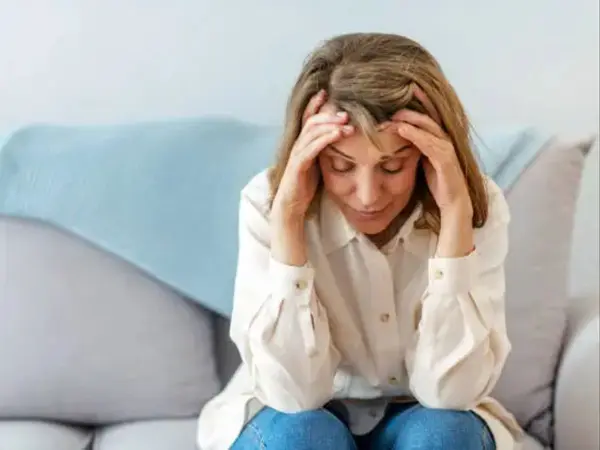
Menopause is a crucial phase in every woman’s life, as it marks the end of her reproductive years. Generally, it is a natural biological transition, but menopause can have long-term effects on physical, emotional, mental, and social well-being.
Mostly, women experience menopause between the ages of 45 and 55 (average age around 50-51), but sometimes it can happen earlier due to genetic factors, autoimmune disorders, and other reasons.
What is menopause?
Menopause occurs because of the gradual loss of ovarian follicular function and a decline in circulating oestrogen levels. But the years leading up to it, known as perimenopause is also significant. This phase is said to last anywhere from two to eight years, and the common symptoms include irregular periods and hormonal fluctuations.
“Menopause is a natural transition in a woman’s life, marked by fluctuating and declining oestrogen levels, which can give rise to a wide range of physical, cognitive, and vasomotor symptoms,” explains Dr Hemanandini Jayaraman, Consultant – Obstetrics & Gynaecology, Manipal Hospital, Old Airport Road. “The severity of these symptoms varies significantly; while some women experience mild discomfort, others may face debilitating changes that affect daily life.”
Early signs often include changes in menstrual flow and cycle length, hot flushes, night sweats, sleep disturbances, and mood changes. Many women also report anxiety, panic attacks, reduced libido, vaginal dryness, weight gain, skin and hair dryness, bloating, and what is commonly described as “brain fog.”
Can menopause affect mental health?
While it is a biological transition, experts suggest that hormonal shifts during perimenopause and menopause can directly impact mood, sleep, and emotional regulation.
Speaking on the same, Dr Chandni Tugnait, MD (A.M) Psychotherapist, Life Alchemist, Coach & Healer, Founder & Director, Gateway of Healing, described that these changes are not about weakness, but body and mind adapting to a major transition. “Many women tell me they have never been anxious or emotionally overwhelmed before, so they don’t recognise themselves during menopause,” she said. “It brings hormonal changes that directly affect mood, sleep, and emotional regulation, and when that happens, even someone with no mental health history can feel unsettled. Add to that the emotional load of this phase of life, changing roles, responsibilities, and relationships.”
When should women seek help?
It is suggested that women shouldn’t wait until their periods stop completely. “Women should seek medical help during perimenopause, not wait for periods to stop,” says Dr Amita Shah, Chairman & HOD – Obstetrics & Gynaecology, Manipal Hospitals, Gurugram. “Early symptoms like irregular cycles, sleep disturbance, anxiety, brain fog, or hot flashes can be managed better when addressed early, improving quality of life and long-term health.”
Psychological support may be needed alongside medical treatment when emotional changes begin to affect sleep, relationships, or daily functioning. Therapy can help women navigate this transition before distress becomes chronic.
Are there effective treatments?
“Yes. While hormone therapy can be beneficial for many, non-hormonal options are also effective. Lifestyle changes, cognitive behavioural therapy, certain antidepressants (SSRIs/SNRIs), gabapentin, clonidine, and vaginal moisturisers can help manage hot flashes, mood changes, sleep problems, and vaginal dryness,” Dr Shah said. “These options are especially useful for women who cannot or do not wish to take hormones.”
She also highlighted a common misconception that “menopause is something women must just tolerate. Symptoms are treatable, and women do not need to suffer in silence.”
Globally, the number of postmenopausal women is rising, yet menopause remains under-researched and under-addressed in many health systems. Experts emphasise that instead of seeing menopause as an ending, it should be considered as an opportunity to reassess health, lifestyle, and priorities.
The articles, news features, interviews, quotes, and media content displayed on this page are the property of their respective publishers and media houses. All such materials have been sourced from publicly available online platforms where our name, views, or contributions have been referenced, quoted, or featured.
Gateway of Healing / Dr. Chandni Tugnait / Others (as applicable) does not claim ownership over any external media content reproduced or linked here. The purpose of displaying these articles is solely for informational use, record-keeping, and to acknowledge media mentions related to our work.
Full credit for authorship, editorial content, and intellectual property rights belongs to the original publishers, journalists, and media organizations.
If any publisher or rights holder wishes to request modification, updated attribution, or removal of any content featured on this website, they may contact us at
info@gatewayofhealing.com,
and we will take appropriate action promptly.
Read the Article on Author's webpage - CLICK HERE