

Close Menu
    Facebook X (Twitter) Instagram
    Thursday, November 19
    Facebook X (Twitter) LinkedIn VKontakte
    chandnitugnaitinnews
    Banner
    • Home
    • Media Presence
    • Mind & wellness
      • Cognitive Health
      • Mental Health
    • Family & Friends
      • Family
      • Friends
    • Relationship
      • Connection & Care
      • Love & Bonding
    • Well Being
      • Life
      • Positivity
    • Workplace
      • Career
      • Workplace
    • contact us
    chandnitugnaitinnews
    Home » The Science Behind Circadian Depression: How Your Poor Sleep Schedule Might Lead to Depression

    The Science Behind Circadian Depression: How Your Poor Sleep Schedule Might Lead to Depression

    Reproduced only for reference to articles mentioning our name. All rights remain with the original publisher.

    Recent research has brought ‘circadian depression’ into the limelight, which people didn’t know about earlier. It indicates how disruption in circadian rhythm can pave the way for depression.
    Only My HealthOnly My Health Mental Health October 24, 20265 Mins Read19 Views
    Share Facebook Twitter Pinterest LinkedIn Tumblr Email WhatsApp
    Share
    Facebook Twitter LinkedIn Pinterest Email
    Most of us know that depression can affect your mood, your energy, and your motivation to get things done. What many people don’t realise is that for some, depression doesn’t feel the same all day long. It tends to get worse at certain hours and ease up at others, and this pattern is closely linked to the body’s internal clock. This is known as circadian depression, and once you understand it, it becomes easier to make sense of what you’re feeling and how it can be treated. In the hustle and bustle, we often ignore the small things needed to maintain our internal system. The body needs rest to function better. Having irregular sleep patterns affects your psychological health, which not only leads to sleep disorders but may also cause other issues, including circadian depression.
    Most of us know that depression can affect your mood, your energy, and your motivation to get things done. What many people don’t realise is that for some, depression doesn’t feel the same all day long. It tends to get worse at certain hours and ease up at others, and this pattern is closely linked to the body’s internal clock. This is known as circadian depression, and once you understand it, it becomes easier to make sense of what you’re feeling and how it can be treated.
    In the hustle and bustle, we often ignore the small things needed to maintain our internal system. The body needs rest to function better. Having irregular sleep patterns affects your psychological health, which not only leads to sleep disorders but may also cause other issues, including circadian depression.
    To get more insights on circadian depression, we spoke to Dr Chandni Tugnait, Psychotherapist, Founder & Director, Gateway of Healing.

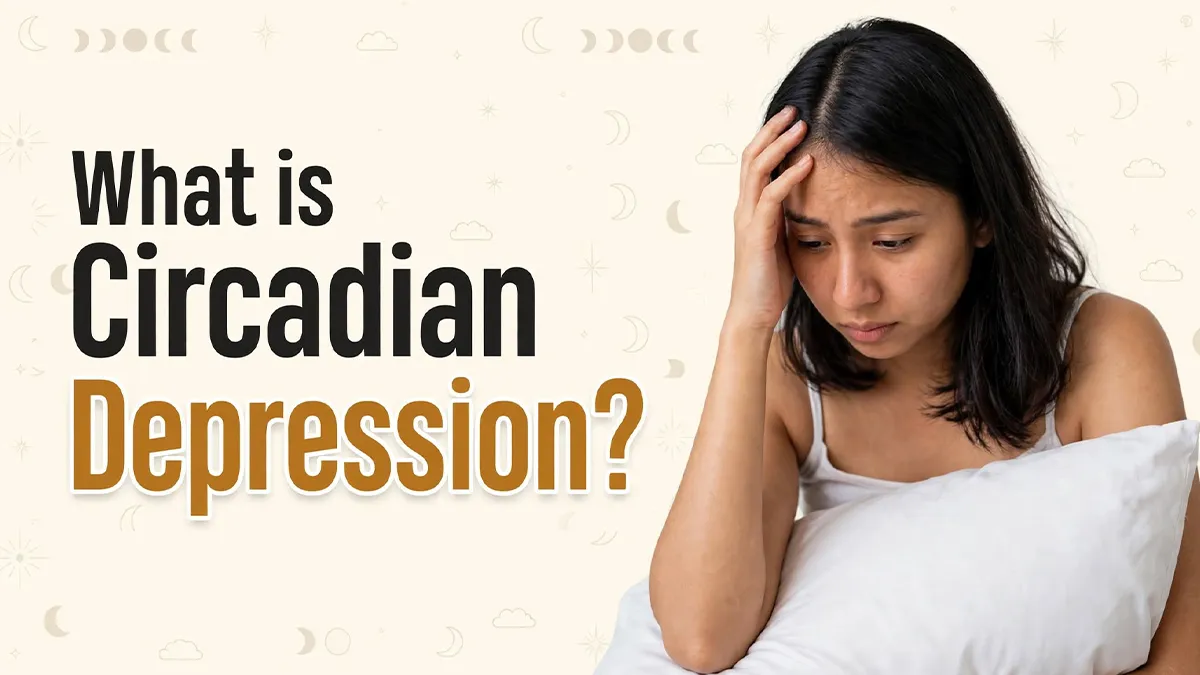
    What is Circadian Depression?

    Circadian Depression is a proposed subtype of depression that is caused when the body’s circadian rhythm, or internal clock, is disrupted. According to a recent study published in the British Journal of Psychiatry, one in four people identified with severe depression have the clinical subtype- circadian depression.
    Explaining further, Dr Tugnait shares that circadian rhythm is the internal system that regulates sleep, waking, hormone release, body temperature, and dozens of other biological processes across a roughly 24-hour cycle. In people with circadian depression, this system is dysregulated in ways that directly affect mood. The biological timing of stress hormones and other mood-related chemicals is disrupted, which means the emotional low points aren’t random. They’re scheduled, in a sense, by a body clock that’s running out of sync.

    Symptoms of Circadian Depression

    The clinical symptoms include:
    • Waking up groggy or extremely tired
    • Disrupted sleep-wake schedule or waking up late every day
    • Life of a ‘night owl’
    • Dealing with social jetlag or sleeping more on free days
    • Significant changes in sleep, mood, energy, and appetite during seasonal shift
    • Battling hypersomnia or sleeping more when depressed
    To confirm the diagnosis of circadian depression, a person should exhibit three or more of the above-listed symptoms.

    Do Circadian Depression Symptoms Vary with Time of The Day?

    For most people with circadian depression, the mornings are the hardest part of the day, and the heaviness slowly eases as the hours go by. A lot of people notice that they wake up feeling low and tired, and even getting out of bed takes a real effort on most days. As the day goes on, the heaviness slowly starts to lift, and by evening they usually feel much more like themselves again.

    Link Between Seasonal Change and Circadian Depression

    According to a study published in the journal ‘Biology’, circadian depression is quite similar to Seasonal Affective Disorder, which usually shows up in winter when the days get shorter, and we don’t get enough sunlight; this can upset the body clock and affect how we feel. People who are sensitive to these changes often find their low phases begin around the same time every year. Because both conditions come from a similar disruption in the body’s rhythm, treatments that help reset that rhythm, such as light therapy, often work well for both.
    Sleep and Mood Feed Each Other Disrupted sleep is both a symptom and a driver of circadian depression. Poor sleep throws the body clock further out of alignment, which worsens mood, which disrupts sleep further. Breaking that cycle is often central to treatment.
    Final Word Recognising that depression can have a biological rhythm to it doesn’t make it easier to live with, but it does make it easier to understand and, importantly, easier to treat. Approaches that work with the body clock rather than against it tend to produce more consistent and lasting relief than those that treat depression as a purely psychological experience.

    FAQ

    • What are the causes of morning depression?

      The major causes of morning depression include irregular sleep, hormonal imbalance, and underlying health concerns.
    • What time of day is depression the worst?

      For most people, depression is worse in the early morning, whereas some people experience intense symptoms during the nighttime.

    The articles, news features, interviews, quotes, and media content displayed on this page are the property of their respective publishers and media houses. All such materials have been sourced from publicly available online platforms where our name, views, or contributions have been referenced, quoted, or featured.

    Gateway of Healing / Dr. Chandni Tugnait / Others (as applicable) does not claim ownership over any external media content reproduced or linked here. The purpose of displaying these articles is solely for informational use, record-keeping, and to acknowledge media mentions related to our work.

    Full credit for authorship, editorial content, and intellectual property rights belongs to the original publishers, journalists, and media organizations.

    If any publisher or rights holder wishes to request modification, updated attribution, or removal of any content featured on this website, they may contact us at info@gatewayofhealing.com, and we will take appropriate action promptly.

    Read the Article on Author's webpage - CLICK HERE

      Leave a comment

      Your email address will not be published. Required fields are marked *

      Circadian Rhythm Depression Awareness Mental Health Mental Health Awareness Mental wellness Sleep and mental health Sleep health Stress Management
      Share. Facebook Twitter Pinterest LinkedIn Tumblr Email
      Previous ArticleMental health experts highlight what late-night doomscrolling does to your nervous system

      Reproduced only for reference to articles mentioning our name. All rights remain with the original publisher.

      Next Article When saying sorry becomes a habit: Expert shares 4 reasons behind over-apologising

      Reproduced only for reference to articles mentioning our name. All rights remain with the original publisher.

      Related Posts

      Mindful festive marketing: Can brands celebrate Diwali without promoting excessive consumption?

      Reproduced only for reference to articles mentioning our name. All rights remain with the original publisher.

      November 18, 2026

      From weddings to birthday parties: Psychotherapist reveals why we feel guilty about missing social celebrations

      Reproduced only for reference to articles mentioning our name. All rights remain with the original publisher.

      November 16, 2026

      Festive shopping hangover: Why overspending on gifts, home décor and no-cost EMIs leaves people anxious long after celebrations end, and how social pressure, comparison and delayed credit card bills fuel post-festival financial stress

      Reproduced only for reference to articles mentioning our name. All rights remain with the original publisher.

      November 15, 2026

      Comments are closed.

      Archives
      Recent Posts
      • Mindful festive marketing: Can brands celebrate Diwali without promoting excessive consumption?

        Reproduced only for reference to articles mentioning our name. All rights remain with the original publisher.

        November 18, 2026
      • From weddings to birthday parties: Psychotherapist reveals why we feel guilty about missing social celebrations

        Reproduced only for reference to articles mentioning our name. All rights remain with the original publisher.

        November 16, 2026
      • 10 Signs You’re in A Truly Healthy Relationship, According To Therapist

        Reproduced only for reference to articles mentioning our name. All rights remain with the original publisher.

        November 16, 2026
      • Festive shopping hangover: Why overspending on gifts, home décor and no-cost EMIs leaves people anxious long after celebrations end, and how social pressure, comparison and delayed credit card bills fuel post-festival financial stress

        Reproduced only for reference to articles mentioning our name. All rights remain with the original publisher.

        November 15, 2026
      • Why some people struggle to enjoy their holidays

        Reproduced only for reference to articles mentioning our name. All rights remain with the original publisher.

        November 14, 2026
      Dr. Chandni Tugnait is the founder of Gateway of Healing, a TEDx speaker, Relationship Expert – Tinder India, NeuroEnergetic Transformation Coach, Psychotherapist, Life Coach, Business Coach, NLP Expert, and Healer. Over the past 15 years, she has transformed lives of more than 50,000 individuals through her work. Featured in over 500 leading media publications, Dr. Chandni is recognized for her expertise in mental health, personal growth, and relationships. Her mission is to empower people to achieve success and well-being through the alignment of energy, mindset and action.
      About

      This website includes recreated content derived from Dr. Chandni’s media features. All original rights & credits belong to the respective publication or media house.

      Facebook X (Twitter) Instagram YouTube LinkedIn
      Copyright © 2026 . Designed by Redcube Digital Media Pvt. Ltd, . This website includes recreated content derived from Dr. Chandni’s media features. All original rights & credits belong to the respective publication or media house.

      Type above and press Enter to search. Press Esc to cancel.