

Close Menu
    Facebook X (Twitter) Instagram
    Friday, October 16
    Facebook X (Twitter) LinkedIn VKontakte
    chandnitugnaitinnews
    Banner
    • Home
    • Media Presence
    • Mind & wellness
      • Cognitive Health
      • Mental Health
    • Family & Friends
      • Family
      • Friends
    • Relationship
      • Connection & Care
      • Love & Bonding
    • Well Being
      • Life
      • Positivity
    • Workplace
      • Career
      • Workplace
    • contact us
    chandnitugnaitinnews
    Home » Why Do You Feel Better After Crying? Understanding the Emotional Relief

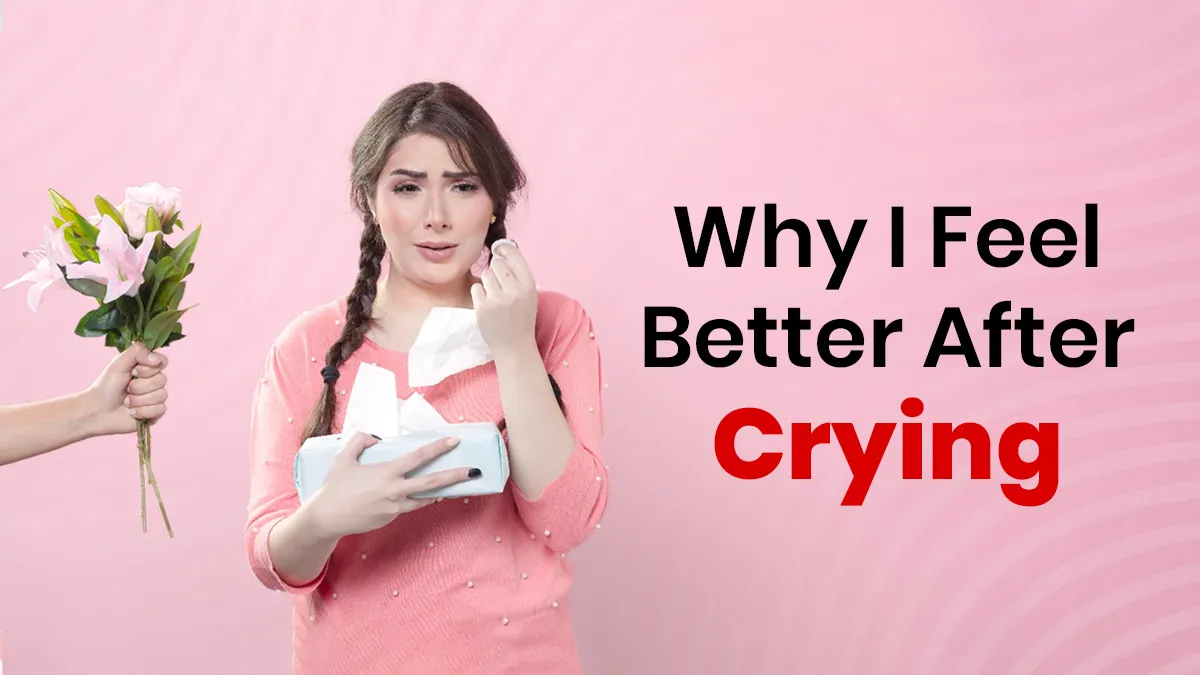
    Why Do You Feel Better After Crying? Understanding the Emotional Relief

    Reproduced only for reference to articles mentioning our name. All rights remain with the original publisher.

    People often cry when they are emotionally burdened. It really helps ease the pain and release stress that has been troubling them. We asked a psychotherapist why we feel better after crying. If you wish to know more, read this article.
    Only My HealthOnly My Health Mental Health September 19, 20265 Mins Read2 Views
    Share Facebook Twitter Pinterest LinkedIn Tumblr Email WhatsApp
    Share
    Facebook Twitter LinkedIn Pinterest Email
    Have you ever had a difficult day, cried for a while, and then felt unexpectedly calmer? Many people experience a sense of relief after crying. It may not solve the problem that caused the tears, but it can sometimes make emotions feel easier to manage. Crying is a natural emotional response. It can happen when we feel sad, overwhelmed, frustrated, angry, hurt, or even extremely happy. But why does crying sometimes make us feel better? We spoke to Dr Chandni Tugnait, Psychotherapist, founder, and Director of Gateway of Healing, to get deeper insights.

    Crying Can Release Emotional Tension

    When emotions build up, keeping them inside can feel exhausting. Crying gives the body a natural way to express what we are feeling rather than continuing to hold it back.
    This does not mean that tears remove stress or negative emotions completely. However, allowing yourself to cry can feel like a release after a period of emotional pressure. For some people, the biggest relief comes from no longer having to hide or control their emotions.

    Your Body May Start To Calm Down

    Crying during an emotional moment is often accompanied by physical changes such as a tight feeling in the chest, faster breathing, muscle tension, or a racing heart.
    • Once the emotional peak passes, the body may gradually move towards a calmer state.
    • Breathing may slow down, muscles may relax, and the intense feeling may become less overwhelming.
    This change can create the feeling that a weight has been lifted.

    Crying Can Help You Process Emotions

    Sometimes we do not fully understand what we are feeling until we allow ourselves to experience it.
    According to a study published in the journal ‘Motivation and Emotion’, crying may give you a pause to acknowledge emotions instead of distracting yourself from them. It can help you recognise that you are hurt, disappointed, exhausted, or simply overwhelmed.
    This emotional awareness can make it easier to think about what you need next. For example, after crying about a stressful situation, you may realise that you need rest, support, a conversation, or a practical solution rather than simply continuing to push yourself.

    Tears Can Also Signal That You Need Support

    Crying can communicate emotions when words are difficult to find. According to a study published in ResearchGate, a person who is crying may not be able to explain exactly what is wrong, but the tears can signal that they are struggling.
    When someone responds with comfort, reassurance, or simply listens, that social support can add to the feeling of relief. This is one reason why crying in the presence of someone you trust may sometimes feel different from crying alone.

    Why Don’t You Always Feel Better After Crying?

    Crying is not a guaranteed emotional reset. You may feel calmer afterwards, but you may also feel tired, embarrassed, irritated, or even more emotional. The effect can depend on what caused the crying, where you are, whether you feel safe, and whether you receive emotional support afterwards.
    If the underlying problem remains unresolved, the sadness or stress may return once the immediate relief fades. Crying should therefore not be seen as a cure for emotional distress. It is simply one way the body and mind can respond to strong emotions.

    Is It Unhealthy To Hold Back Tears?

    Occasionally choosing not to cry is not necessarily harmful. There are situations where you may need to stay composed, such as during work, an important meeting, or an emergency.
    However, constantly feeling that you must suppress every emotional reaction may make it harder to recognise and process what you are going through. There is also no need to force yourself to cry. People express emotions differently. Some cry easily, while others rarely shed tears even when they are deeply upset.
    Neither response automatically means that a person is dealing with emotions better or worse.

    When Should Frequent Crying Be Taken Seriously?

    Crying from time to time is a normal part of emotional life. But frequent or uncontrollable crying, particularly when it comes with persistent sadness, hopelessness, loss of interest, severe anxiety, sleep problems, or difficulty managing everyday activities, may deserve attention.
    In such situations, speaking to a doctor or mental health professional can help identify what is behind the emotional distress. Final Word The important thing is not to judge yourself for crying. Tears can be a normal response to difficult emotions. Sometimes, letting yourself cry can provide a brief pause, help you acknowledge what you are feeling, and make it easier to take the next step.

    FAQ

    • Is it healthy to cry for 2 hours?

      Crying is a natural response to pain, stress, or grief. However, crying for longer periods may cause exhaustion and lightheadedness in some people.
    • Which gender cries the most?

      Reports suggest that women cry more than men. Additionally, females also cry more frequently and for longer periods.

    The articles, news features, interviews, quotes, and media content displayed on this page are the property of their respective publishers and media houses. All such materials have been sourced from publicly available online platforms where our name, views, or contributions have been referenced, quoted, or featured.

    Gateway of Healing / Dr. Chandni Tugnait / Others (as applicable) does not claim ownership over any external media content reproduced or linked here. The purpose of displaying these articles is solely for informational use, record-keeping, and to acknowledge media mentions related to our work.

    Full credit for authorship, editorial content, and intellectual property rights belongs to the original publishers, journalists, and media organizations.

    If any publisher or rights holder wishes to request modification, updated attribution, or removal of any content featured on this website, they may contact us at info@gatewayofhealing.com, and we will take appropriate action promptly.

    Read the Article on Author's webpage - CLICK HERE

      Leave a comment

      Your email address will not be published. Required fields are marked *

      Emotional Release Emotional Resilience emotional wellbeing Mental Health Mental wellness Mind body connection Psychology of Emotions Stress Management
      Share. Facebook Twitter Pinterest LinkedIn Tumblr Email
      Previous ArticleWhy does nostalgia hit harder as we get older? A psychotherapist explains the emotional pull of the past

      Reproduced only for reference to articles mentioning our name. All rights remain with the original publisher.

      Next Article Why do we suddenly lose motivation after achieving a goal? Psychotherapist explains the psychology behind it

      Reproduced only for reference to articles mentioning our name. All rights remain with the original publisher.

      Related Posts

      From concert tickets to weekend getaways: Why young indians are spending more on experiences than things

      Reproduced only for reference to articles mentioning our name. All rights remain with the original publisher.

      October 12, 2026

      Why do we feel awkward when someone compliments us? Psychotherapist explains why we struggle to accept praise

      Reproduced only for reference to articles mentioning our name. All rights remain with the original publisher.

      October 11, 2026

      Workplace to brand culture: Can employees’ mental health become part of a company’s public identity?

      Reproduced only for reference to articles mentioning our name. All rights remain with the original publisher.

      October 11, 2026

      Comments are closed.

      Archives
      Recent Posts
      • From concert tickets to weekend getaways: Why young indians are spending more on experiences than things

        Reproduced only for reference to articles mentioning our name. All rights remain with the original publisher.

        October 12, 2026
      • Why do we feel awkward when someone compliments us? Psychotherapist explains why we struggle to accept praise

        Reproduced only for reference to articles mentioning our name. All rights remain with the original publisher.

        October 11, 2026
      • Workplace to brand culture: Can employees’ mental health become part of a company’s public identity?

        Reproduced only for reference to articles mentioning our name. All rights remain with the original publisher.

        October 11, 2026
      • How Beauty Advertising Influences Body Image: Dr Chandni Tugnait Explains Hidden Cost Of Chasing Perfection

        Reproduced only for reference to articles mentioning our name. All rights remain with the original publisher.

        October 11, 2026
      • Why has being busy become a status symbol? Psychotherapist explains our obsession with staying productive

        Reproduced only for reference to articles mentioning our name. All rights remain with the original publisher.

        October 10, 2026
      Dr. Chandni Tugnait is the founder of Gateway of Healing, a TEDx speaker, Relationship Expert – Tinder India, NeuroEnergetic Transformation Coach, Psychotherapist, Life Coach, Business Coach, NLP Expert, and Healer. Over the past 15 years, she has transformed lives of more than 50,000 individuals through her work. Featured in over 500 leading media publications, Dr. Chandni is recognized for her expertise in mental health, personal growth, and relationships. Her mission is to empower people to achieve success and well-being through the alignment of energy, mindset and action.
      About

      This website includes recreated content derived from Dr. Chandni’s media features. All original rights & credits belong to the respective publication or media house.

      Facebook X (Twitter) Instagram YouTube LinkedIn
      Copyright © 2026 . Designed by Redcube Digital Media Pvt. Ltd, . This website includes recreated content derived from Dr. Chandni’s media features. All original rights & credits belong to the respective publication or media house.

      Type above and press Enter to search. Press Esc to cancel.