

Close Menu
    Facebook X (Twitter) Instagram
    Friday, October 16
    Facebook X (Twitter) LinkedIn VKontakte
    chandnitugnaitinnews
    Banner
    • Home
    • Media Presence
    • Mind & wellness
      • Cognitive Health
      • Mental Health
    • Family & Friends
      • Family
      • Friends
    • Relationship
      • Connection & Care
      • Love & Bonding
    • Well Being
      • Life
      • Positivity
    • Workplace
      • Career
      • Workplace
    • contact us
    chandnitugnaitinnews
    Home » When Does Workplace Stress Become Burnout? A Psychotherapist Explains

    When Does Workplace Stress Become Burnout? A Psychotherapist Explains

    Reproduced only for reference to articles mentioning our name. All rights remain with the original publisher.

    Dismissing everyday work stress is not a healthy practice for mental health. This can not only cause burnout but also expose you to several other psychological issues in the long run.
    Only My HealthOnly My Health Workplace August 22, 20264 Mins Read3 Views
    Share Facebook Twitter Pinterest LinkedIn Tumblr Email WhatsApp
    Share
    Facebook Twitter LinkedIn Pinterest Email
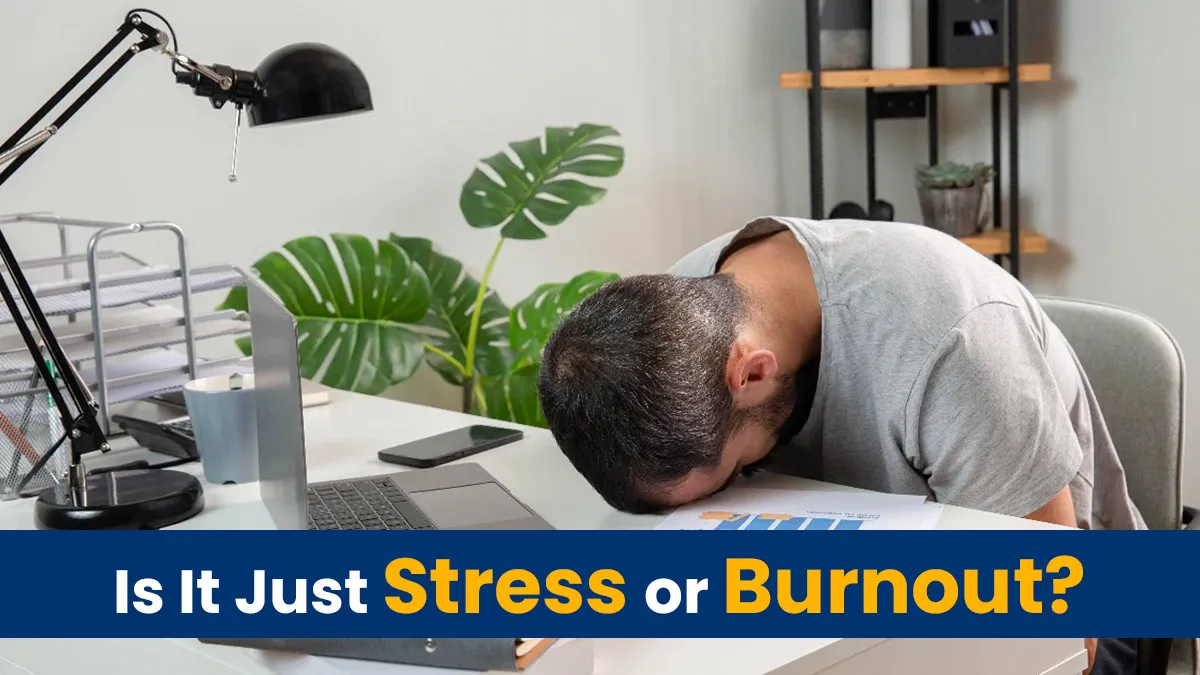
    Stress at work is something most people accept as part of the deal. Deadlines, difficult managers, and periods of intense pressure are some common experiences most working adults navigate regularly and recover from. But burnout is something different, and the line between the two matters more because what each one needs in response looks quite different from the other.

    When Workplace Stress Becomes Burnout

    To understand the consequences of long-term stress and its manifestation as burnout, we spoke to Dr Chandni Tugnait, Psychotherapist, Founder and Director, Gateway of Healing. She explained everything in detail.

    Stress Has A Source, Burnout Doesn’t

    Workplace stress is usually tied to something specific, like a big deadline, a difficult conversation, a demanding phase. It eases when that thing passes. According to a study published in the journal ‘Scientific Reports’, burnout happens when stress becomes chronic and recovery stops occurring altogether. It’s what accumulates when the pressure never lets up long enough for the nervous system to reset.

    Exhaustion, That Sleep Doesn’t Fix

    With stress, rest helps, but with burnout, you can sleep for eight hours and wake up feeling exactly as depleted as when you went to bed. That kind of fatigue doesn’t go away with a good night’s sleep or even a few days off, and that’s usually the first sign that something has moved beyond ordinary tiredness into something that needs more attention.

    You Aren’t Mentally Involved In Work

    • You start being indifferent about everything instead of just being tired after a hard work week.
    • Work that used to feel like it meant something starts feeling empty.
    • You show up, you do the tasks, but there’s nothing behind it anymore.
    These are some signs that burnout has taken over stress. For someone who previously genuinely cared about their work, that flatness is one of the more unsettling things to notice in themselves.

    Small Things Start Feeling Heavy

    When burnout sets in, the cognitive load of even normal routine tasks becomes disproportionately difficult, according to a study published in the International Journal of Environmental Research and Public Health. Replying to a straightforward email feels like an effort, making basic decisions becomes exhausting, and this isn’t laziness or distraction. It’s a nervous system that has been running at full capacity for too long and is starting to show the strain in ways that affect day-to-day functioning.

    Physical Symptoms of Burnout Get Overlooked

    Burnout doesn’t stay in the mind, but also moves into the body fairly quickly. Persistent headaches, recurring illness, digestive problems, jaw tension, and a general physical heaviness that doesn’t have an obvious medical cause are all ways the body communicates what the mind has been experiencing.
    Many people spend months addressing the physical symptoms without ever connecting them back to what’s happening at work.

    Weekends Stop Feeling Like Recovery

    A useful way to gauge where you are is to notice how you feel by Sunday evening. Stress typically eases over a proper weekend, but burnout doesn’t.
    If the dread of Monday arrives before Sunday is even over, and if time away from work stops feeling genuinely restorative, the body and mind are telling you something important about how far beyond stress you’ve already moved.

    How To Distinguish Between Stress and Burnout

    “The distinction between brain fog, burnout, and stress is that rest helps stress, but burnout requires something more fundamental,” shares Dr Tugnait. “A genuine look at workload, boundaries, and the beliefs a person holds about their own worth being tied to how productive they are. A holiday might offer temporary relief, but returning to the same conditions means returning to the same outcome,” she adds.
    Addressing burnout properly usually requires professional support, honest conversations about what needs to change structurally, and the willingness to stop treating exhaustion as a badge of commitment.
    Final Word Burnout doesn’t announce itself loudly; rather, it arrives gradually, disguised as tiredness, then detachment, then a quiet inability to remember why any of it ever mattered. Catching it early and taking it seriously when you do is genuinely one of the more important things you can do for your long-term health and your ability to keep doing work that means something to you.

    FAQ

    • What is often mistaken for burnout?

      Some people mistake low energy, fatigue, and poor focus for burnout. It is important to understand the fine line and seek necessary professional help.
    • How long does burnout typically last?

      Burnout may last from several weeks to years. This depends on the condition, and healing time also depends on various factors.

    The articles, news features, interviews, quotes, and media content displayed on this page are the property of their respective publishers and media houses. All such materials have been sourced from publicly available online platforms where our name, views, or contributions have been referenced, quoted, or featured.

    Gateway of Healing / Dr. Chandni Tugnait / Others (as applicable) does not claim ownership over any external media content reproduced or linked here. The purpose of displaying these articles is solely for informational use, record-keeping, and to acknowledge media mentions related to our work.

    Full credit for authorship, editorial content, and intellectual property rights belongs to the original publishers, journalists, and media organizations.

    If any publisher or rights holder wishes to request modification, updated attribution, or removal of any content featured on this website, they may contact us at info@gatewayofhealing.com, and we will take appropriate action promptly.

    Read the Article on Author's webpage - CLICK HERE

      Leave a comment

      Your email address will not be published. Required fields are marked *

      Burnout emotional wellbeing Employee Wellbeing Mental Health at Work Mental Health Awareness Stress Management Work-Life Balance Workplace stress
      Share. Facebook Twitter Pinterest LinkedIn Tumblr Email
      Previous ArticleAre likes becoming your self-worth? Psychotherapist explains the social media validation trap

      Reproduced only for reference to articles mentioning our name. All rights remain with the original publisher.

      Next Article Expert Psychotherapist Explains Why Sibling Relationships Don’t End In Childhood And How They Shape Your Emotional Health

      Reproduced only for reference to articles mentioning our name. All rights remain with the original publisher.

      Related Posts

      From concert tickets to weekend getaways: Why young indians are spending more on experiences than things

      Reproduced only for reference to articles mentioning our name. All rights remain with the original publisher.

      October 12, 2026

      Why do we feel awkward when someone compliments us? Psychotherapist explains why we struggle to accept praise

      Reproduced only for reference to articles mentioning our name. All rights remain with the original publisher.

      October 11, 2026

      Workplace to brand culture: Can employees’ mental health become part of a company’s public identity?

      Reproduced only for reference to articles mentioning our name. All rights remain with the original publisher.

      October 11, 2026

      Comments are closed.

      Archives
      Recent Posts
      • From concert tickets to weekend getaways: Why young indians are spending more on experiences than things

        Reproduced only for reference to articles mentioning our name. All rights remain with the original publisher.

        October 12, 2026
      • Why do we feel awkward when someone compliments us? Psychotherapist explains why we struggle to accept praise

        Reproduced only for reference to articles mentioning our name. All rights remain with the original publisher.

        October 11, 2026
      • Workplace to brand culture: Can employees’ mental health become part of a company’s public identity?

        Reproduced only for reference to articles mentioning our name. All rights remain with the original publisher.

        October 11, 2026
      • How Beauty Advertising Influences Body Image: Dr Chandni Tugnait Explains Hidden Cost Of Chasing Perfection

        Reproduced only for reference to articles mentioning our name. All rights remain with the original publisher.

        October 11, 2026
      • Why has being busy become a status symbol? Psychotherapist explains our obsession with staying productive

        Reproduced only for reference to articles mentioning our name. All rights remain with the original publisher.

        October 10, 2026
      Dr. Chandni Tugnait is the founder of Gateway of Healing, a TEDx speaker, Relationship Expert – Tinder India, NeuroEnergetic Transformation Coach, Psychotherapist, Life Coach, Business Coach, NLP Expert, and Healer. Over the past 15 years, she has transformed lives of more than 50,000 individuals through her work. Featured in over 500 leading media publications, Dr. Chandni is recognized for her expertise in mental health, personal growth, and relationships. Her mission is to empower people to achieve success and well-being through the alignment of energy, mindset and action.
      About

      This website includes recreated content derived from Dr. Chandni’s media features. All original rights & credits belong to the respective publication or media house.

      Facebook X (Twitter) Instagram YouTube LinkedIn
      Copyright © 2026 . Designed by Redcube Digital Media Pvt. Ltd, . This website includes recreated content derived from Dr. Chandni’s media features. All original rights & credits belong to the respective publication or media house.

      Type above and press Enter to search. Press Esc to cancel.