Close Menu
    Facebook X (Twitter) Instagram
    Monday, August 31
    Facebook X (Twitter) LinkedIn VKontakte
    chandnitugnaitinnews
    Banner
    • Home
    • Media Presence
    • Mind & wellness
      • Cognitive Health
      • Mental Health
    • Family & Friends
      • Family
      • Friends
    • Relationship
      • Connection & Care
      • Love & Bonding
    • Well Being
      • Life
      • Positivity
    • Workplace
      • Career
      • Workplace
    • contact us
    chandnitugnaitinnews
    Home » AI is always listening, but can it replace a therapist? Experts weigh in

    AI is always listening, but can it replace a therapist? Experts weigh in

    Reproduced only for reference to articles mentioning our name. All rights remain with the original publisher.

    The article explores the growing use of AI for emotional support while examining its limitations compared to human therapy, emphasizing mental health, emotional wellbeing, and professional psychological care.
    WIONWION Career July 7, 20265 Mins Read0 Views
    Share Facebook Twitter Pinterest LinkedIn Tumblr Email WhatsApp
    Share
    Facebook Twitter LinkedIn Pinterest Email
    In today’s world, many people find it easier to reach out to an AI chatbot instead of a friend. Even at odd hours, it responds within seconds, asks how you are feeling, and offers words of comfort. But is it right to rely on a virtual companion instead of waiting for your next therapy session?
    Artificial intelligence is changing the way people seek help, making mental health-related info more accessible. But can it replace actual therapy and the human connection? WION reached out to experts to understand where AI can help and where it falls short.

    How much can AI help?

    Artificial intelligence has become increasingly capable of handling routine mental wellness tasks. It can help with some of the straightforward parts of mental health support, including mood tracking, breathing exercises, journaling prompts, and recognising unhelpful thought patterns. This is very useful, especially for people who don’t have easy access to a therapist.
    But the part of therapy that actually does the deeper work isn’t really about techniques at all. “It’s about feeling genuinely heard by another human being who is fully present with you in the room. Processing trauma, sitting with grief, navigating a crisis, or working through something that keeps shifting as you talk about it, all of that requires a level of human judgment, emotional attunement, and moment-to-moment sensitivity that AI simply isn’t capable of yet,” says Dr Chandni Tugnait, MD (A.M), Psychotherapist, Life Alchemist, Coach & Healer, Founder & Director, Gateway of Healing.

    Why are people opening up to AI?

    One reason behind the growing popularity of AI companions is their constant availability. “More and more people are now turning to AI for emotional support, mostly because they’re available at three in the morning when no one else is, and they don’t judge you, interrupt you, or make you feel like a burden for bringing something up again. For a lot of people, that kind of unconditional availability fills a gap that real relationships, as much as we value them, don’t always manage to. There’s also something about the absence of social consequences that makes it easier to say things out loud that feel too vulnerable or too complicated to say to an actual person in your life,” Dr Tugnait adds.
    Dr Abhay Singh Tomar, Consultant Neuro-Psychiatrist, Kailash Hospital, Greater Noida, a part of Kailash Healthcare, agrees that AI can encourage people to speak about their emotions.
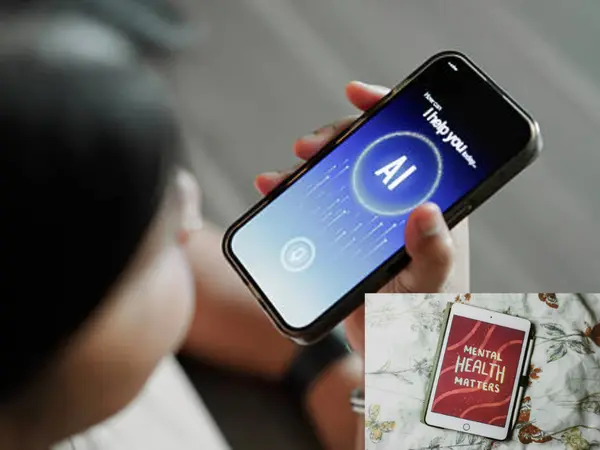
    AI for mental health support Photograph: (Unsplash/X)

    “AI companions can offer fast conversational support, keep people encouraged to open up emotionally and nudge healthy routines. But you know they should really be seen as backup instruments not as replacement for mental healthcare. If someone has depression, anxiety, or just feels severe psychological distress, they still need prompt evaluation, evidence-based treatment, and supervision by qualified mental health professionals.”

    Who is more likely to become attached?

    Experts believe that while anyone can use AI companions, some groups may be more likely to develop emotional bonds with them.
    “Some people, especially adolescents, young adults, older adults dealing with loneliness, or folks with social anxiety, might end up attaching more easily to AI companions. Traits like introversion, emotional reactivity, or simply preferring non-judgmental conversations can steer that attachment too, even though everyone’s experience is honestly pretty different,” says Dr Tomar.
    While AI can feel like a safe space, experts warn that emotional attachment should not replace human relationships.

    The danger of replacing people with AI

    Spending more time talking to a chatbot than interacting with real people could increase loneliness. “If dependence grows too much, relying on AI for emotional help might shrink real human contact, push social withdrawal further, and make it harder to get professional care when symptoms get worse. Social withdrawal can cause onset of other comorbid psychological disorders. Sure, AI might bring temporary calm but it can’t really mirror the empathy, responsibility, or the subtle understanding that good relationships, and trained clinicians, bring,” says Dr Tomar.
    Dr Tugnait also believes AI should never be mistaken for therapy.

    AI for mental health support Photograph: (Unsplash/X)

    “No, and this matters more than people realise. AI can be a useful first step, a way to process thoughts, feel less alone at odd hours, or build enough clarity to eventually seek real help. But it doesn’t have the training, the ethical accountability, or the genuine human presence that therapy actually requires. Using it as a permanent substitute is a bit like managing a serious injury with painkillers indefinitely. It masks the discomfort without ever really addressing the root cause.”

    Where AI lacks

    Despite the AI being advanced, it still lacks and has various limitations in mental healthcare. “Artificial intelligence cannot comprehend emotions, make appropriate decisions, or comprehend complex social and psychological ideas. The inability of artificial intelligence is that it cannot assess the risk of suicide, diagnose mental illnesses, or respond to emergencies. However, the clinicians will always be needed for individualized treatment, crisis intervention, and recovery techniques in the long run,” says Dr Tomar.
    Therefore, artificial intelligence should be viewed as a supplement rather than a substitute for professional care.


    The articles, news features, interviews, quotes, and media content displayed on this page are the property of their respective publishers and media houses. All such materials have been sourced from publicly available online platforms where our name, views, or contributions have been referenced, quoted, or featured.

    Gateway of Healing / Dr. Chandni Tugnait / Others (as applicable) does not claim ownership over any external media content reproduced or linked here. The purpose of displaying these articles is solely for informational use, record-keeping, and to acknowledge media mentions related to our work.

    Full credit for authorship, editorial content, and intellectual property rights belongs to the original publishers, journalists, and media organizations.

    If any publisher or rights holder wishes to request modification, updated attribution, or removal of any content featured on this website, they may contact us at info@gatewayofhealing.com, and we will take appropriate action promptly.

    Read the Article on Author's webpage - CLICK HERE

      Leave a comment

      Your email address will not be published. Required fields are marked *

      Artificial Intelligence emotional wellbeing Human Connection Lifestyle wellbeing Mental Health Awareness Mental Health Support Mental wellness Social connection
      Share. Facebook Twitter Pinterest LinkedIn Tumblr Email
      Previous ArticleWhy Celebrities Normalising Cheating May Be Changing Modern Relationships, Experts Explain

      Reproduced only for reference to articles mentioning our name. All rights remain with the original publisher.

      Next Article Why letting go of people can be one of the healthiest decisions you make

      Reproduced only for reference to articles mentioning our name. All rights remain with the original publisher.

      Related Posts

      Think therapy is only for a crisis? Psychotherapist debunks common myths Indians still believe

      Reproduced only for reference to articles mentioning our name. All rights remain with the original publisher.

      August 12, 2026

      Man in the MIRROR

      Reproduced only for reference to articles mentioning our name. All rights remain with the original publisher.

      August 4, 2026

      Is It Just Shyness or Are You Experiencing Social Anxiety? A Psychotherapist Simplifies

      Reproduced only for reference to articles mentioning our name. All rights remain with the original publisher.

      August 4, 2026

      Comments are closed.

      Archives
      Recent Posts
      • Think therapy is only for a crisis? Psychotherapist debunks common myths Indians still believe

        Reproduced only for reference to articles mentioning our name. All rights remain with the original publisher.

        August 12, 2026
      • Man in the MIRROR

        Reproduced only for reference to articles mentioning our name. All rights remain with the original publisher.

        August 4, 2026
      • Is It Just Shyness or Are You Experiencing Social Anxiety? A Psychotherapist Simplifies

        Reproduced only for reference to articles mentioning our name. All rights remain with the original publisher.

        August 4, 2026
      • Trauma Bonding

        Reproduced only for reference to articles mentioning our name. All rights remain with the original publisher.

        July 30, 2026
      • Anxiety Attack Vs Panic Attack: The Subtle Difference Most People Miss

        Reproduced only for reference to articles mentioning our name. All rights remain with the original publisher.

        July 30, 2026
      Dr. Chandni Tugnait is the founder of Gateway of Healing, a TEDx speaker, Relationship Expert – Tinder India, NeuroEnergetic Transformation Coach, Psychotherapist, Life Coach, Business Coach, NLP Expert, and Healer. Over the past 15 years, she has transformed lives of more than 50,000 individuals through her work. Featured in over 500 leading media publications, Dr. Chandni is recognized for her expertise in mental health, personal growth, and relationships. Her mission is to empower people to achieve success and well-being through the alignment of energy, mindset and action.
      About

      This website includes recreated content derived from Dr. Chandni’s media features. All original rights & credits belong to the respective publication or media house.

      Facebook X (Twitter) Instagram YouTube LinkedIn
      Copyright © 2026 . Designed by Redcube Digital Media Pvt. Ltd, . This website includes recreated content derived from Dr. Chandni’s media features. All original rights & credits belong to the respective publication or media house.

      Type above and press Enter to search. Press Esc to cancel.