


Close Menu
    Facebook X (Twitter) Instagram
    Thursday, November 19
    Facebook X (Twitter) LinkedIn VKontakte
    chandnitugnaitinnews
    Banner
    • Home
    • Media Presence
    • Mind & wellness
      • Cognitive Health
      • Mental Health
    • Family & Friends
      • Family
      • Friends
    • Relationship
      • Connection & Care
      • Love & Bonding
    • Well Being
      • Life
      • Positivity
    • Workplace
      • Career
      • Workplace
    • contact us
    chandnitugnaitinnews
    Home » Radhika Apte says she cannot watch violent films: ‘My brain can’t compute it’

    Radhika Apte says she cannot watch violent films: ‘My brain can’t compute it’

    Reproduced only for reference to articles mentioning our name. All rights remain with the original publisher.

    Actor Radhika Apte recently spoke about her discomfort with watching violent films and questioned their popularity. A psychologist explains why some viewers are more affected by graphic content, from heightened emotional responses and past trauma to sensitivity to disturbing imagery.
    TheIndianExpressTheIndianExpress Mental Health November 2, 20263 Mins Read18 Views
    Share Facebook Twitter Pinterest LinkedIn Tumblr Email WhatsApp
    Share
    Facebook Twitter LinkedIn Pinterest Email
    In a recent interview, Radhika Apte confessed that she cannot watch violent movies. The actress said, “I don’t want to watch abusive films. My brain can’t compute it. Our senses are getting numb. Look at the firecrackers we crack in this pollution. People don’t care about animals and other things. I don’t know why we are being so unaware of others and ourselves.” “I find it abusive to watch that amount of consistent violence. I don’t understand. These films are doing crores. How do you only blame the film industry? My brain can’t understand how such violent films are doing well at the box office,” she told Zoom.

    Why are some people unable to watch violent or abusive content?

    Watching scenes of brutal fights, abuse, or graphic violence can be genuinely difficult for some people, and finding such films hard to sit through is far more common than most people realise. Some viewers can watch a gory action film and forget about it by the next morning. On the other hand, others feel shaken for days and keep replaying the scenes in their head when they’re trying hard to concentrate on work. At times, even falling asleep becomes difficult. Dr Chandni Tugnait, MD (A.M.), Psychotherapist, Life Alchemist, Coach & Healer, Founder & director of Gateway of Healing, says these reactions aren’t negative; the difference lies in what happens inside the brain while the film plays. She explains why some people get affected more:
    • When the body believes it: The brain cannot easily tell a screen apart from real life. So when a character is attacked, the person watching often reacts the way they would if something bad were happening right in front of them. Their heart speeds up, their muscles tighten, and stress hormones start flowing, even though they’re sitting safely on their sofa with a bowl of popcorn.
    • Feeling what others feel: People who are very empathetic tend to have a harder time with these films. They don’t just see a character getting hurt; they feel a bit of that pain themselves, and that can be exhausting. It’s often the reason someone needs to leave the room or switch a film off halfway, while a friend watching alongside them doesn’t seem bothered at all.
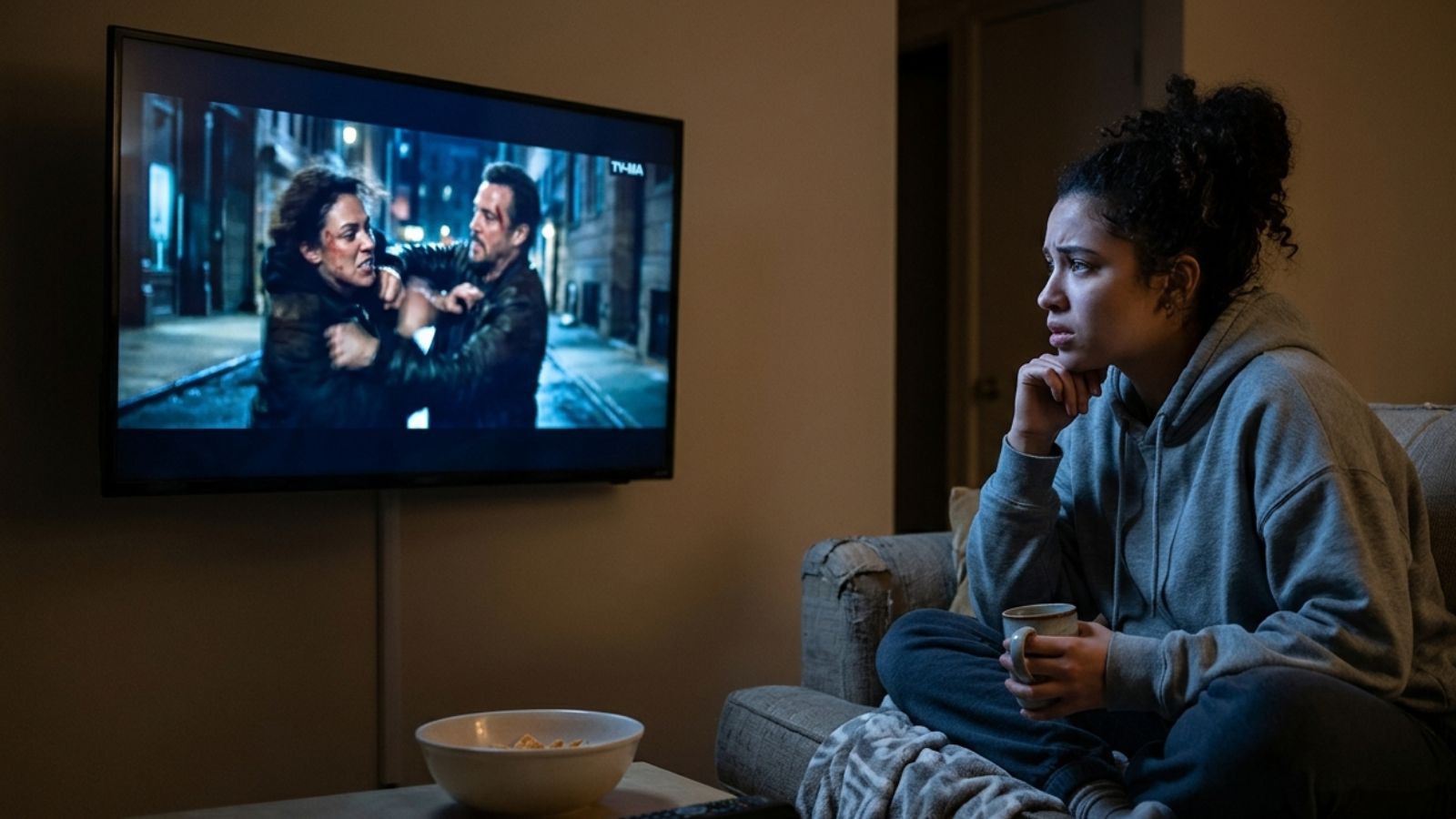
    Viewers can respond differently to violent scenes, with some experiencing distress long after watching them. Viewers can respond differently to violent scenes, with some experiencing distress long after watching them. (AI-generated image)
    • When the past returns: For someone who has been through abuse or violence in their own life, a film can bring it all back without any warning. Sometimes it isn’t even the main scene that does it; it could be a door slamming or a man raising his voice, and suddenly they’re feeling the same fear they felt years ago.
    • Some nervous systems react more: Some people’s nervous systems are simply more sensitive than others. Loud sounds and disturbing images hit them harder, and once they’re unsettled, it can take quite a while to feel calm again.
    • Getting used to it: While some people avoid such movies, others watch a lot of violent content, and it slowly stops affecting them as much as it used to. That might sound harmless, but it can mean that real violence, whether in the news or around them, no longer shocks them the way it should.
    However, staying away from violent or abusive films has nothing to do with being weak or too sensitive. It simply means a person understands what their mind can handle and is choosing to look after it.

    The articles, news features, interviews, quotes, and media content displayed on this page are the property of their respective publishers and media houses. All such materials have been sourced from publicly available online platforms where our name, views, or contributions have been referenced, quoted, or featured.

    Gateway of Healing / Dr. Chandni Tugnait / Others (as applicable) does not claim ownership over any external media content reproduced or linked here. The purpose of displaying these articles is solely for informational use, record-keeping, and to acknowledge media mentions related to our work.

    Full credit for authorship, editorial content, and intellectual property rights belongs to the original publishers, journalists, and media organizations.

    If any publisher or rights holder wishes to request modification, updated attribution, or removal of any content featured on this website, they may contact us at info@gatewayofhealing.com, and we will take appropriate action promptly.

    Read the Article on Author's webpage - CLICK HERE

      Leave a comment

      Your email address will not be published. Required fields are marked *

      Emotional Resilience emotional wellbeing Mental Health Mental Health Awareness Nervous System Regulation Psychological Effects Trauma Awareness Violent Films
      Share. Facebook Twitter Pinterest LinkedIn Tumblr Email
      Previous ArticleHalloween 2026: Why do people pay to be scared? Experts explain the psychology of horror

      Reproduced only for reference to articles mentioning our name. All rights remain with the original publisher.

      Next Article Breaking The Silence: Why Women in Metro Cities Are Deleting Dating Apps

      Reproduced only for reference to articles mentioning our name. All rights remain with the original publisher.

      Related Posts

      Mindful festive marketing: Can brands celebrate Diwali without promoting excessive consumption?

      Reproduced only for reference to articles mentioning our name. All rights remain with the original publisher.

      November 18, 2026

      From weddings to birthday parties: Psychotherapist reveals why we feel guilty about missing social celebrations

      Reproduced only for reference to articles mentioning our name. All rights remain with the original publisher.

      November 16, 2026

      Festive shopping hangover: Why overspending on gifts, home décor and no-cost EMIs leaves people anxious long after celebrations end, and how social pressure, comparison and delayed credit card bills fuel post-festival financial stress

      Reproduced only for reference to articles mentioning our name. All rights remain with the original publisher.

      November 15, 2026

      Comments are closed.

      Archives
      Recent Posts
      • Mindful festive marketing: Can brands celebrate Diwali without promoting excessive consumption?

        Reproduced only for reference to articles mentioning our name. All rights remain with the original publisher.

        November 18, 2026
      • From weddings to birthday parties: Psychotherapist reveals why we feel guilty about missing social celebrations

        Reproduced only for reference to articles mentioning our name. All rights remain with the original publisher.

        November 16, 2026
      • 10 Signs You’re in A Truly Healthy Relationship, According To Therapist

        Reproduced only for reference to articles mentioning our name. All rights remain with the original publisher.

        November 16, 2026
      • Festive shopping hangover: Why overspending on gifts, home décor and no-cost EMIs leaves people anxious long after celebrations end, and how social pressure, comparison and delayed credit card bills fuel post-festival financial stress

        Reproduced only for reference to articles mentioning our name. All rights remain with the original publisher.

        November 15, 2026
      • Why some people struggle to enjoy their holidays

        Reproduced only for reference to articles mentioning our name. All rights remain with the original publisher.

        November 14, 2026
      Dr. Chandni Tugnait is the founder of Gateway of Healing, a TEDx speaker, Relationship Expert – Tinder India, NeuroEnergetic Transformation Coach, Psychotherapist, Life Coach, Business Coach, NLP Expert, and Healer. Over the past 15 years, she has transformed lives of more than 50,000 individuals through her work. Featured in over 500 leading media publications, Dr. Chandni is recognized for her expertise in mental health, personal growth, and relationships. Her mission is to empower people to achieve success and well-being through the alignment of energy, mindset and action.
      About

      This website includes recreated content derived from Dr. Chandni’s media features. All original rights & credits belong to the respective publication or media house.

      Facebook X (Twitter) Instagram YouTube LinkedIn
      Copyright © 2026 . Designed by Redcube Digital Media Pvt. Ltd, . This website includes recreated content derived from Dr. Chandni’s media features. All original rights & credits belong to the respective publication or media house.

      Type above and press Enter to search. Press Esc to cancel.