







Disturbing truths
The Wall Street Journal in 2023 published an investigative report wherein they mentioned with evidence that ‘Instagram connects and promotes accounts that are openly dedicated to the purchasing and selling of child sexual abuse materials’. The report also added that Instagram allows users to search for terms that its own algorithms know may be harmful or illegal content. Six months ago, another investigative report by The New York Times, titled “A Marketplace of Girl Influencers Managed by Moms and Stalked by Men,” sheds light on a troubling trend. The article reveals unsettling details about young girls’ Instagram accounts, managed by their mothers, which, as they grow in popularity, attract a growing number of male followers. Many of these men engage in manipulative behaviour, including flattery, bullying, or even blackmailing the mothers and daughters for more explicit content. Some accounts go as far as offering exclusive chat sessions and paid content through subscriptions. Journalists Jennifer Valentino-DeVries and Michael H Keller analysed data from over 5,000 Instagram accounts featuring young girls to uncover this pattern. The research also revealed that posts with more “suggestive” and “racier” content tend to attract a higher volume of likes and comments, predominantly from male users. After several months of tracking activity on Telegram, it was discovered that certain men were exchanging images and openly discussing disturbing fantasies involving sexually abusing young girls whose accounts they followed.The cut-throat world of social media
The competition is fierce. And the people competing are not college kids, not university kids and neither are they school students. The competition is among innocent little toddlers, kids who are being pushed into the cruel world of social media ‘to find a place in this world‘. This is not a problem in the West, it is also happening in India as well. The influencer marketing industry in India is growing rapidly and is expected to reach a value of Rs 2,200 crore by 2025, up from Rs 900 crore in 2021. Content creation has become a lucrative career option, and it’s not just adults—kids are also making substantial money from brand endorsements as influencers.

When kids become the ‘product’
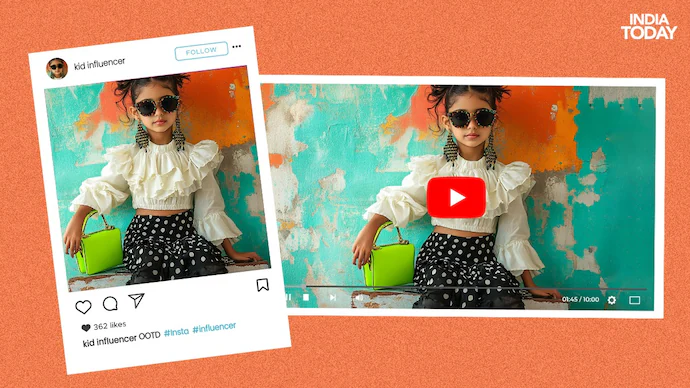
When discussing children’s exposure on social media, it’s essential to differentiate between two categories: momfluencers and kidfluencers. A mom influencer typically creates content around parenting, lifestyle, and family life, with her children often featuring in the narrative. She controls the direction of the content and partnerships, focusing on her experience as a parent. In contrast, a kidfluencer is a child who becomes the central focus of the content, with their personality and appeal driving brand deals and endorsements. Parents manage their social media presence, often creating content centred on the child’s activities, fashion, or toys. While mom influencers share their parenting journey, kidfluencers are more like the “product” in the spotlight, with adults behind the scenes orchestrating it all. More often than not, these children are thrown into the world of influencing without fully understanding the consequences. Parents may script the videos, and children rehearse before shooting. What appears to be a spontaneous, delightful moment to the audience could involve hours of practice. The pressure to create constant content is real and can take a toll on young minds.
Do parents understand the long-term consequences?
While their intentions may be to secure a future for their child or capitalise on brand partnerships, it often blurs the line between parenting and business. In reality, children are being monetised, often without fully understanding what this can lead to or how vulnerable they can get. Riddhi Doshi Patel, child psychologist and parenting counsellor, explains, “Parents usually operate from a space of less awareness and excitement and a desire to showcase their child’s talents to the world. In doing so, they often share extremely personal content – I’ve seen influencers post about their child’s bath time, poop time, and even meals. Why? If they knew how these images could be misused, or considered whether their child would be comfortable with it when they grow up, they likely wouldn’t be doing it.”Emotional and cognitive impacts
Dr Chandni Tugnait, psychotherapist and founder-director of Gateway of Healing, shares her insights on the emotional and cognitive impacts of pushing toddlers into influencer roles. According to her, while the practice may seem harmless, it can lead to significant developmental challenges for young children. Here are the key concerns she highlights:- Disrupted attachment patterns: The parent-child relationship may become performance-focused rather than nurturing.
- Blurring of reality: Young children might struggle to differentiate between real-life experiences and staged content.
- Delay in social skills: Toddlers require real-world play and interactions, not virtual validation through likes and followers.
- Unhealthy stress: The pressure to constantly create content can introduce stress at a vulnerable age.
- Identity issues: Long-term, children’s sense of self may become overly tied to their online persona and external validation.
- Privacy concerns: These children’s lives are being documented and shared without their consent.
What role does consent play in this picture?
The people in question here are underage, and mostly the mothers are in control. This makes consent a tricky issue, but child psychologist and parent coach Payel Narang believes that consent is essential. “Consent plays an important role, but toddlers or young children (5–6 years old) may not fully grasp its meaning,” she explains. Payel, who has a 5-year-old son who occasionally appears in her Instagram posts, shares her approach to managing consent responsibly. “My son is 5, and I’ve always tried to get his consent before shooting videos with him for social media. From an early age, I’ve explained that I make videos for Instagram, where everyone can see them, to help other parents. I also tell him what the videos are about and what we’re filming. Sometimes he doesn’t want to participate or just isn’t in the mood, so I either shoot it without him or postpone it if he’s needed. While he may not fully understand the concept yet, I do my best to seek his consent and explain why I’m making the videos.” Dr Riddhi Doshi Patel offers a few guidelines for parents to follow before posting content about their children:- Sharing fewer, more selective moments helps protect the child’s privacy by keeping certain aspects of their life offline.
- As children get older, parents should involve them in discussions about social media and seek their input on what is shared about them.
- If a child expresses discomfort or reluctance about being featured, parents should respect their feelings and adjust accordingly.
- While social media can be a fun and creative space, parents need to balance their child’s enjoyment with their right to privacy and protection.
How to strike a balance
Psychologists stress the importance of safeguarding children’s privacy and well-being when sharing content online. Dr Tugnait advises parents to limit exposure by selectively sharing meaningful moments, rather than turning their child into constant content. She explains, “As children grow older, involving them in decisions about what to post fosters respect for their autonomy.” Additionally, she suggests using privacy settings to ensure sensitive moments are only shared with close family and friends. Payel Narang echoes this sentiment, emphasising the need to avoid sharing images or videos that could sexualise children. She advises against revealing personal information like live locations, addresses, or school details. For example, she shares, “I’ve never posted a picture of my son in his school uniform or on school grounds,” highlighting the importance of being mindful of not sharing personal details online.Keep a few questions in mind
As parents, we all want the best for our children, but how do we truly decide what is best? The concept of ‘what’s best’ can be blurred and highly subjective. Before launching your child into the content creation journey, ask yourself: Is this what you want, or is it what your child wants? That simple question may clear up a lot of confusion.The articles, news features, interviews, quotes, and media content displayed on this page are the property of their respective publishers and media houses. All such materials have been sourced from publicly available online platforms where our name, views, or contributions have been referenced, quoted, or featured.
Gateway of Healing / Dr. Chandni Tugnait / Others (as applicable) does not claim ownership over any external media content reproduced or linked here. The purpose of displaying these articles is solely for informational use, record-keeping, and to acknowledge media mentions related to our work.
Full credit for authorship, editorial content, and intellectual property rights belongs to the original publishers, journalists, and media organizations.
If any publisher or rights holder wishes to request modification, updated attribution, or removal of any content featured on this website, they may contact us at info@gatewayofhealing.com, and we will take appropriate action promptly.
Read the Article on Author's webpage - CLICK HERE


