


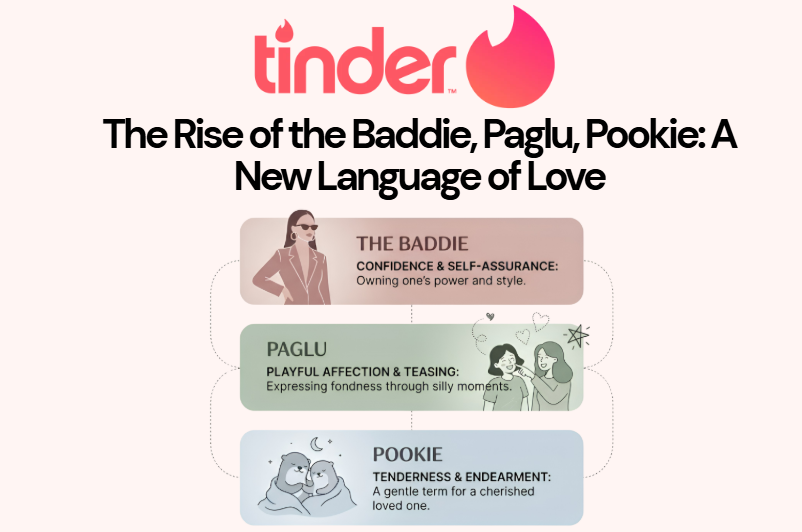
- Baddie signals admiration
- Pookie signals warmth and safety, and
- Paglu signals playful fondness
 Why it works
From strangers to something more
Endearments show up early for a reason. “They act as emotional accelerators,” says Dr. Tugnait. “A private name creates instant closeness, it signals someone is no longer a stranger.”
It’s also why humour leads. “A paglu or a meme softens vulnerability, making interest feel lighter, easier. Increasingly,” she adds. It’s also identity-coded – gym paglu, matcha paglu – where shared hobbies matter as much as chemistry.
A language shaped by culture
“This shift in language is closely tied to larger cultural and psychological changes,” says Dr. Tugnait. “Therapy-informed vocabulary – ideas like emotional safety, attachment styles, and boundaries – has become part of everyday conversation, which brings a certain self-awareness to how young people express interest and affection.”
“Attachment styles often show up subtly in the language people use,” says Dr. Tugnait. “Someone who leans towards assertive, status-affirming terms like ‘baddie’ or ‘queen’ may value independence, expressing admiration more than emotional need. Softer terms like ‘pookie’ or ‘baby’ tend to signal comfort with closeness, pointing to a more secure – or sometimes anxious – approach to intimacy. Playful nicknames like ‘paglu’ often sit in between, using humour to create connection while keeping vulnerability light.”
She adds, “These patterns aren’t definitive, but they are telling. Language can offer small cues into how someone relates to closeness, but it’s only one part of the picture, what really matters is how consistently those cues show up in behaviour over time.”
What stands out is the mix. A pookie can exist alongside a paglu in the same breath – softness layered with play, global with local. It reflects a generation that doesn’t commit to one emotional tone, but moves fluidly between many. In modern dating, connection isn’t defined by a single feeling – it’s shaped by nuance, contradiction, and the freedom to express both at once.
Why it works
From strangers to something more
Endearments show up early for a reason. “They act as emotional accelerators,” says Dr. Tugnait. “A private name creates instant closeness, it signals someone is no longer a stranger.”
It’s also why humour leads. “A paglu or a meme softens vulnerability, making interest feel lighter, easier. Increasingly,” she adds. It’s also identity-coded – gym paglu, matcha paglu – where shared hobbies matter as much as chemistry.
A language shaped by culture
“This shift in language is closely tied to larger cultural and psychological changes,” says Dr. Tugnait. “Therapy-informed vocabulary – ideas like emotional safety, attachment styles, and boundaries – has become part of everyday conversation, which brings a certain self-awareness to how young people express interest and affection.”
“Attachment styles often show up subtly in the language people use,” says Dr. Tugnait. “Someone who leans towards assertive, status-affirming terms like ‘baddie’ or ‘queen’ may value independence, expressing admiration more than emotional need. Softer terms like ‘pookie’ or ‘baby’ tend to signal comfort with closeness, pointing to a more secure – or sometimes anxious – approach to intimacy. Playful nicknames like ‘paglu’ often sit in between, using humour to create connection while keeping vulnerability light.”
She adds, “These patterns aren’t definitive, but they are telling. Language can offer small cues into how someone relates to closeness, but it’s only one part of the picture, what really matters is how consistently those cues show up in behaviour over time.”
What stands out is the mix. A pookie can exist alongside a paglu in the same breath – softness layered with play, global with local. It reflects a generation that doesn’t commit to one emotional tone, but moves fluidly between many. In modern dating, connection isn’t defined by a single feeling – it’s shaped by nuance, contradiction, and the freedom to express both at once.
The articles, news features, interviews, quotes, and media content displayed on this page are the property of their respective publishers and media houses. All such materials have been sourced from publicly available online platforms where our name, views, or contributions have been referenced, quoted, or featured.
Gateway of Healing / Dr. Chandni Tugnait / Others (as applicable) does not claim ownership over any external media content reproduced or linked here. The purpose of displaying these articles is solely for informational use, record-keeping, and to acknowledge media mentions related to our work.
Full credit for authorship, editorial content, and intellectual property rights belongs to the original publishers, journalists, and media organizations.
If any publisher or rights holder wishes to request modification, updated attribution, or removal of any content featured on this website, they may contact us at info@gatewayofhealing.com, and we will take appropriate action promptly.
Read the Article on Author's webpage - CLICK HERE