





The fatigue beneath the feeds
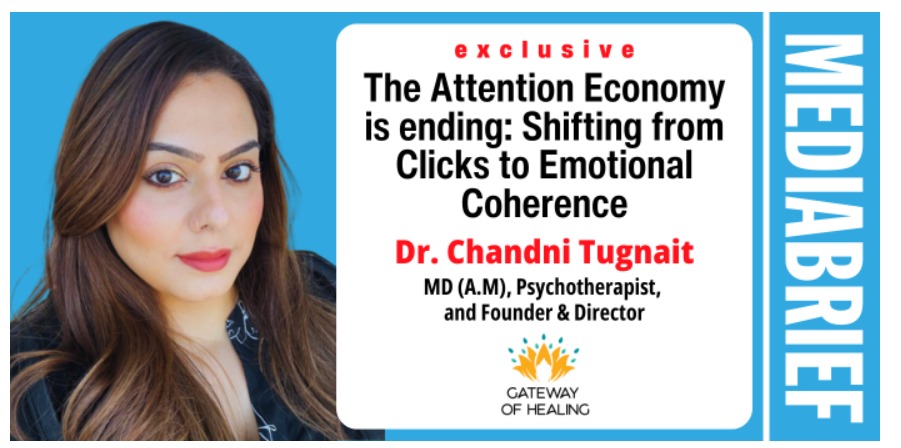
If the attention economy were still thriving, we would feel energised by endless content. Instead, many people report feeling drained, restless, and oddly dissatisfied after hours online. Doomscrolling has become a common habit, as short-form content leaves little to ponder. Even viral moments fade quickly, replaced by the next distraction. This fatigue is not accidental, as the attention economy was built on fragmentation. It rewarded interruption over integration, stimulation over meaning. Our nervous systems were never designed to process such rapid emotional switching, where one moment we laugh, the next we panic, then we compare, then we consume. Over time, this constant toggling limits emotional regulation. What we are witnessing now is collective burnout, which is not from work alone, but from overstimulation.The attention economy, as we have known it, is thinning out. In its place, a deeper, more human currency is emerging, that is, emotional coherence. This is not a technological shift alone, but it is also a psychological one: Dr Chandni Tugnait
Why clicks are losing their power
Clicks once indicated curiosity, but today, they often signal compulsion. Algorithms learnt to provoke rather than serve, because they are aware that outrage travels faster than nuance. Extremes outperform balance. In such an ecosystem, creators are incentivised to exaggerate, simplify, or polarise.The rise of emotional coherence
Emotional coherence refers to alignment between thoughts, emotions, values, and actions. When someone experiences coherence, there is a sense of internal safety and clarity. Content that creates this state does not shock the nervous system, but it steadies it. Now, people are gravitating towards creators, leaders, and brands that make them feel understood rather than manipulated. They are seeking emotional regulation, not emotional spikes. In practical terms, this means slower content that offers longer reflection and honest conversations. Stories that do not rush to conclusions, and language that respects complexity instead of flattening it. Emotional coherence does not demand attention; it earns presence.There is a growing preference for fewer voices, deeper conversations, and content that feels grounding rather than hijacking. This is why high engagement no longer guarantees trust. Virality does not equal credibility, and reach without resonance feels hollow: Dr Chandni Tugnait
From performance to presence
The attention economy rewarded performance, as loudness, certainty, and visibility mattered more than depth. Many creators built identities around being constantly on, constantly relevant. But presence is different from performance. Presence requires the ability to sit with ambiguity, to speak without forcing impact, and to allow silence where necessary. It feels less urgent, but far more enduring. This shift is evident across different digital mediums. Now, long-form podcasts thrive while short clips act as entry points, not destinations. Newsletters with smaller but loyal readerships outperform mass mailers in influence. Even in journalism, readers linger longer on pieces that explore emotional undercurrents rather than breaking news alone. The metric is changing from how many saw it to how it landed.Why emotional coherence builds trust
Trust is not built through frequency, but it is built through consistency of tone, integrity of message, and emotional safety. When content aligns with the reader’s lived experience, the nervous system relaxes. This is where influence becomes sustainable. Emotionally coherent content does not rush to fix the reader. It reflects them, and it does not position itself as superior knowledge but as shared inquiry. This subtle shift transforms the reader from a passive consumer into an engaged participant. In an era of misinformation and content fatigue, trust has become scarce, and what is scarce becomes valuable.The implications for creators and brands
For creators, this shift demands courage. Emotional coherence cannot be manufactured through templates or hacks, because it requires self-awareness. What am I actually trying to say? What emotional state am I transmitting? Am I regulated while creating this? For brands, the implications are even deeper. Marketing that relies on urgency, fear, or artificial aspiration is losing effectiveness. Consumers are responding better to honesty, transparency, and emotional intelligence. This does not mean abandoning the old strategy. It means grounding strategy in psychology rather than manipulation. Brands that understand emotional coherence will prioritise community over campaigns, dialogue over broadcasting, and long-term relationships over short-term spikes.Marketing that relies on urgency, fear, or artificial aspiration is losing effectiveness. Consumers are responding better to honesty, transparency, and emotional intelligence. This does not mean abandoning the old strategy. It means grounding strategy in psychology rather than manipulation: Dr Chandni Tugnait
A quieter future, a deeper impact
The end of the attention economy does not mean the end of digital influence. It means its maturation, where we are moving from a phase of excess to one of discernment. In this emerging space, the most impactful voices may not be the loudest. They will be the steadiest and will create spaces where people feel less scattered after engaging, not more. Emotional coherence is not flashy. It does not trend overnight. But it builds something far more durable, which is trust, resonance, and meaningful connection. As audiences, we are learning to listen to how content makes us feel, not just what it says. As creators and communicators, the invitation is clear, stop chasing attention and start cultivating coherence. The future does not belong to those who can grab the most eyeballs. It belongs to those who can hold the human psyche with care.The articles, news features, interviews, quotes, and media content displayed on this page are the property of their respective publishers and media houses. All such materials have been sourced from publicly available online platforms where our name, views, or contributions have been referenced, quoted, or featured.
Gateway of Healing / Dr. Chandni Tugnait / Others (as applicable) does not claim ownership over any external media content reproduced or linked here. The purpose of displaying these articles is solely for informational use, record-keeping, and to acknowledge media mentions related to our work.
Full credit for authorship, editorial content, and intellectual property rights belongs to the original publishers, journalists, and media organizations.
If any publisher or rights holder wishes to request modification, updated attribution, or removal of any content featured on this website, they may contact us at info@gatewayofhealing.com, and we will take appropriate action promptly.
Read the Article on Author's webpage - CLICK HERE


