


A mischievous assassin—a giant white shark named Diane—ripped through the air, carried on the wings of seagulls. She had every intention of plonking her weight down on the car of Jerry Generazzo, the greedy mayor of Beaverton, when the chase took on an exciting turn. I was so engrossed in these events unfurling on the screen that I nearly missed the dirty looks that my teenage daughter was throwing my way. I hadn’t even realised that I had sent up a loud “Wheeeee!” to cheer Diane’s aerial glide, earning titters from the theatre audience and exasperated sighs from the offspring. However, I remained unfazed in my rather enthusiastic enjoyment of Hoppers, the latest animation from the Pixar stable which was released last month.
The film follows the journey of Mabel Tanaka, a young girl, who together with her grandma, finds solace in an idyllic glade within the city. She continues to frequent the spot long after her grandmother is gone. When she realises that the mayor is planning to build a freeway right through the glade, Tanaka frantically searches for solutions to save the habitat.
During intermission, as I looked around the theatre, there were the usual gaggle of kids chaperoned by a parent or two, out to celebrate a birthday or end of exams with a movie. However, there were many groups of adults in the audience as well, sans children. I couldn’t help but ask one of them—a Gurugram-based entrepreneur, S.B.—why she and her friends were here to watch a movie supposedly for younger audiences. “Who says animation is for kids alone? Look at Encanto (2021) or Coco (2017), all of these movies tap into complex emotions but in such an engaging manner,” she says. S.B. and her friends are part of a small movie club where they regularly discuss animations. In this particular film, she liked the way the pressing issue or unmindful urban development was tackled. “But more than that, I could relate to the void left by the demise of a grandparent—the sudden loss of comfort, support and wisdom,” adds the entrepreneur.
Animated content is no longer being consumed by kids but also by many adults. This has been a growing trend. Back in 2007, Pew Research Centre, an American think-tank, conducted a study, What they watch online. The survey revealed that animation videos had captured the attention of 19% of the online population of adults. 32% of internet users, aged 18-29, said they watched or downloaded animation or cartoons online—19% of users, aged 30-49, also reported this. Today, with a mix of anime, animated shorts and features—both new and old—available on streaming platforms, this number would only have increased.
According to Devanshi Desai, Mumbai-based counseling psychologist and couples’ therapist, this trend ties in with the kind of content being consumed today. “Easy access to AI has flooded social media with animated reels about animals behaving like humans or humans leading contented lives in idyllic climes,” she says. “Such animation offers a sense of emotional safety and large dollops of self-soothing.”
As a millennial, growing up in the 1980s-90s, that one-hour of animation on Doordarshan every Sunday, featuring English cartoons like Ducktales or Talespin or the Jungle Book dubbed in Hindi, offered a portal into fantastical worlds. There were occasional treats of being taken to the theatre to watch Lion King or Aladdin. With the advent of satellite television, Scooby Doo, The Jetsons and Johnny Bravo made inroads into our lives, with parents allowing half an hour of Cartoon Network after homework was done. It’s no wonder then that for most of us, especially those aged 35 and above, animation has long occupied a hallowed—almost magical—space in our lives. “I recently found Ducktales on YouTube. When I heard it in English, instead of the dubbed version that we grew up with, I felt like I was watching it afresh. I watch 8-10 minutes of Ducktales after work—it’s not just a stressbuster but is also a reminder of my childhood,” says Radhika Das, 38, a Delhi-based French teacher.
There is, of course, animation created solely for adults as well—be it the evergreen Simpsons or Family Guy, or the more recent Harley Quinn. But there is something to be said about watching films like Inside Out (2015), Sing (2016) and Frozen (2013), which reach out to all age groups. Besides allowing you to become a part of a collective experience, they take you back to innocent, simpler times, when lives were more cocooned. This feeling allows you to feel anchored during uncertain and conflicted times. Recent pop-culture trends have caught on to these emotions. Last year, for instance, the Ghibli aesthetic went viral, as people the world over used AI-generated artwork to create profile pictures in Studio Ghibli’s hand-drawn aesthetic, featuring dreamy pastel visuals. While the ethics of this is murky, the tendency to use animation for self-articulation is evident.
According to Khushnaaz Noras, Mumbai-based psychologist and psychotherapist, Studio Ghibli movies and others like Inside Out feel like a giant hug. “In the fast-moving pace of the world, many people miss some sort of stability. People want to sometimes go back to the basics of slowing down and feeling like their earlier selves,” she explains.
Chandni Tugnait, psychotherapist and founder, Gateway of Healing, Gurugram, says this shift is not limited to just nostalgia anymore. In her view, animated storytelling carries genuine emotional weight. “It tackles grief, identity and anxiety with such tenderness that live-action mode rarely permits itself. The visual unreality of animation creates a kind of psychological permission – feelings land differently when the world on screen is not mimicking our own. In an age of relentless overstimulation, that clarity feels restorative rather than childish.”
Das agrees. She admits to feeling tired of watching crime and mystery thrillers all the time. “Sometimes it feels like the gore has embedded itself into my very brain cells. Watching Luca or Zootopia feels like a relief,” she says.
Everyone has a different kind of connection with animation. Some have grown up with a movie series—for instance, I first watched Toy Story in 1995, and since then have seen all the sequels that have followed. At other times, you are introduced to a series by the kids. While they move on to something else, you find yourself hooked, and end up watching it even when they are not around.
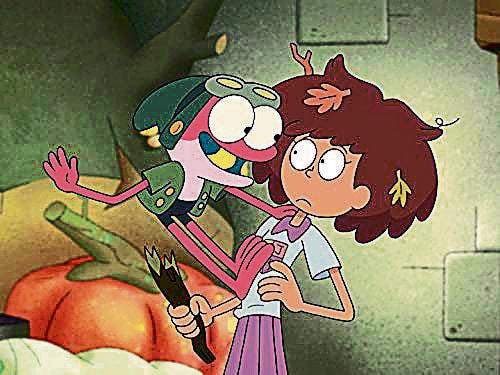
My list of these binge-worthy series is only growing, with series like Amphibia, The Owl House, Gravity Falls, Big City Greens and She-Ra and the Princesses of Power being added to it. I recently raced through She-Ra, a dystopian series set on the planet Etheria. The story revolves around a reluctant protagonist, Adora, who comes across a magical sword. She joins a group of powerful princesses to take on the evil Lord Hordak and his Horde. The show’s treatment of queer and neurodiverse characters is so matter-of-fact and it can lead to a lot of interesting conversations around inclusivity.
Often childhood fascination with animation can become a lifelong passion. Shikha Chopra, 36, Mumbai-based interior designer, is a self-confessed animation junkie. She is not content with merely watching animated films and series, rather Chopra wants to know about the creative process. Together with her six-year-old daughter, she watches behind-the-scenes shorts on YouTube, the way different actors voice their characters, or the research that has gone into films such as Frozen. “Everything is 3D now. But there is so much beauty in some of the earliest hand-drawn animation,” she says.
Many like Chopra also like to usher the animated world into their actual lives. She hopes to visit Montmarte, Paris, which has served as an inspiration for Ratatouille.
Meanwhile at our home, you will find books such as Art of Ducktales and Art of Amphibia—the latter is a shared prized possession between my daughter and me, which introduces you frame by frame to the development of characters that inhabit the series, Amphibia, set in a wild marshland full of anthropomorphic amphibians and dangerous beasts.
Making complex emotions accessible
Assam-based animator-producer Longbir Ingti Kathar, who worked with Disney (India) for seven-and-a-half years with a short stint in the US, has been watching Bluey with his three-year-old son. The Australian series centred around a Blue Heeler pup and her family has emerged as a worldwide phenomenon—in January, Nielsen announced the ARTEY Awards for the most-watched streaming titles for 2025 and the show won the “second consecutive top streaming title of the year with 45 billion viewing minutes’. CNN recently did a report about how grownups constituted a major audience for Bluey.
In Kathar’s view, the shift in adult engagement with animation is in sync with parenting styles across the world. A lot of people back in the 70s-80s grew up with a “talk-down” parenting approach. “Today, however, parents are more involved. They are more conscious. Animation has contributed to a lot of subtle changes. Take, Bluey, for instance, in which the father, Bandit, is so emotionally supportive of his two daughters. There are so many elements in the show for the grown ups as well that you often forget that you are watching an animation. It feels as if someone has recorded details from our everyday life,” he adds.
Also, the style of animation is different from earlier ones. Multiple subplots unfurl simultaneously. “And look at the themes Bluey is tackling,” says Kathar. He recounts a series of episodes about how one of the aunts, Brandy, is struggling to have kids. “Multiple episodes were centred around issues of fertility and pregnancy loss. Other episodes talked about Attention Deficit Hyperactivity Disorder and hearing impairment. These are anthropomorphic characters. And yet, the way they are showing issues is so real,” he adds.
While animation is not used as a tool in therapy, it is helping many articulate suppressed emotions. Tugnait has seen clients bring animated films into conversation themselves. “Animation simplifies things without dumbing them down. For people who find direct emotional confrontation overwhelming, it offers an accessible side door,” she says. “Film doesn’t replace therapy, but makes therapy possible in a way it hadn’t been before,” adds Tugnait.
The role of films like Inside Out can’t be ignored in simplifying psychological concepts. “Such films can be especially useful in exploring loss, fear, anxiety and emotional blocks without the layers of defensiveness that can come up in real-life discussions,” says Desai. In fact the two Inside Out films have helped start conversations around anxiety or how different people visualise emotions. Noras counts Turning Red as another significant film when it comes to articulating the pressures of adolescence
. The animated film is centred around Mei, a 13-year-old girl, who transforms into a giant red panda anytime she experiences a strong emotion. “I have had many young people tell me that they will turn into a red panda if they don’t learn to deal with anger,” says Noras. In some cases, the film also becomes a means for adolescents and parents to bond. A lot of teens that I know have shown Turning Red to their mothers and asked them to not be strict and overprotective like Mei’s mom.
Meanwhile, my tryst with animation has evolved from the nostalgic and comforting to the philosophical. The quotable quotes in my life right now all hail from some film or the other. If you hear me describe myself as, “Just west of weird, south of strange and north of normal,” look up Gravity Falls, and rest assured that you will find it somewhere in there.
The articles, news features, interviews, quotes, and media content displayed on this page are the property of their respective publishers and media houses. All such materials have been sourced from publicly available online platforms where our name, views, or contributions have been referenced, quoted, or featured.
Gateway of Healing / Dr. Chandni Tugnait / Others (as applicable) does not claim ownership over any external media content reproduced or linked here. The purpose of displaying these articles is solely for informational use, record-keeping, and to acknowledge media mentions related to our work.
Full credit for authorship, editorial content, and intellectual property rights belongs to the original publishers, journalists, and media organizations.
If any publisher or rights holder wishes to request modification, updated attribution, or removal of any content featured on this website, they may contact us at info@gatewayofhealing.com, and we will take appropriate action promptly.
Read the Article on Author's webpage - CLICK HERE