


A brain primed for pleasure
Holi doesn’t appear out of nowhere. It follows weeks of spiritual discipline, Shivratri fasting, Ekadashi observances, and periods of reduced stimulation, according to Dr Adwani. When the brain experiences lower stimulation for a sustained period, its receptors become more sensitive. In simple terms, the brain becomes primed. It’s like turning down background noise before a big crescendo; when joy finally arrives, it lands harder. Neuroscience supports this idea. Reduced sensory input can heighten responsiveness later. So by the time Holi morning comes around, your brain is biologically more receptive to pleasure.A psychotherapist explains the feeling of freedom
Dr Chandni explains, “Holi is not just a festival of colours; it is a festival of release. There is something deeply symbolic about picking up a handful of colour and throwing it into the air, or onto someone you care about. In that moment, hesitation drops, formality dissolves, and for a brief time, everyone looks equally vibrant, equally messy, equally human. Throwing colours feels freeing because it breaks structure. Most of the year, we are contained, we manage how we appear, what we say, and how we behave. Holi disrupts that control, as it invites spontaneity, it encourages laughter and boisterousness that is louder than usual, connection and affection in the festive atmosphere that is less guarded. The act of applying colour is playful, almost childlike. It brings people back to a simpler emotional state.” She adds, “There is also something powerful about physical expression. Emotions that stay bottled up often need safe outlets. On Holi, energy moves outward through singing, dancing, splashing colour, all of which allows the body to release stored tension. Even those who feel reserved throughout the year often find themselves more open on this day.”The calming power of Holika Dahan
The night before Holi, communities gather around the ceremonial fire known as Holika Dahan. It’s symbolic, good over evil, but it’s also physiologically grounded. Dr Adwani notes that research suggests sitting near a fire can lower blood pressure and promote a sense of calm. Firelight has been associated with reduced stress responses and stronger social bonding. When an entire neighbourhood gathers around the same flame, the sense of belonging intensifies. He describes this night as a kind of “brain reset”. Stress eases. The nervous system slows down. Social connection deepens. In short, your emotional baseline stabilises before the next day’s high-energy celebration.Colour, touch and the sensory explosion
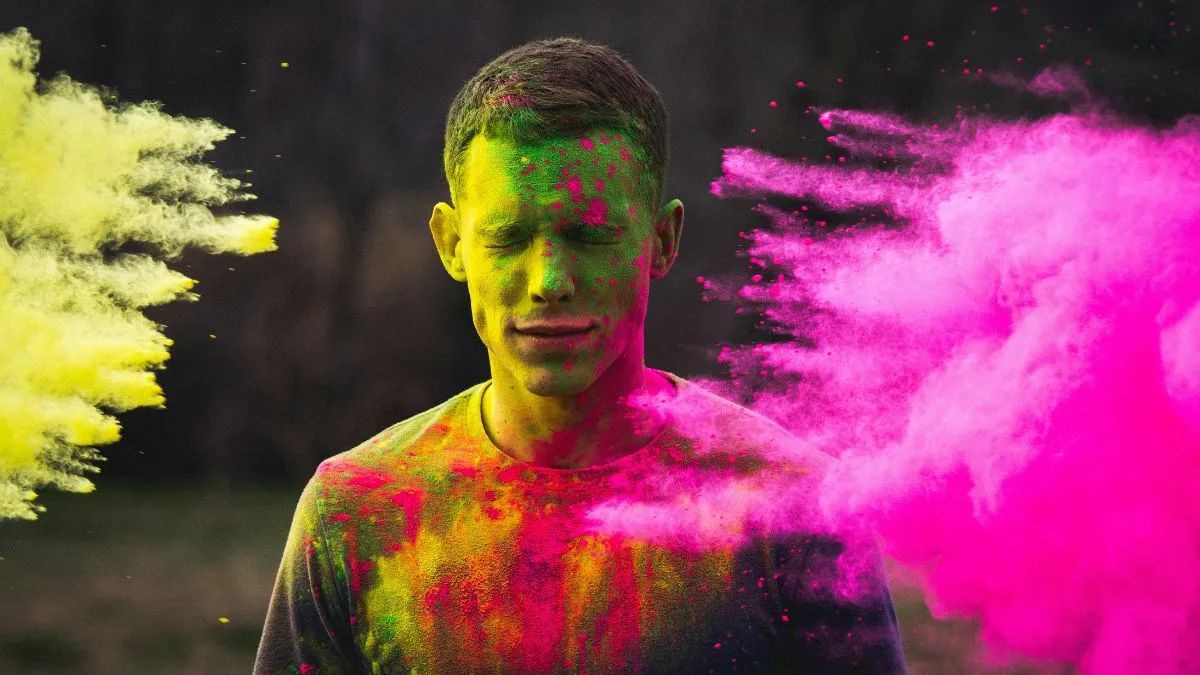
Then comes the morning. And everything lights up. Throwing colour stimulates the visual cortex. Applying gulal activates touch receptors. Dancing to dhol releases endorphins, the body’s natural feel-good chemicals. Splashing water, laughing loudly, running through clouds of pink and yellow, all of it creates a full sensory surge. Dr Adwani explains that this multi-sensory engagement encourages neural growth and stronger neural connections. Movement, rhythm and synchronised dancing in groups are particularly powerful; collective motion boosts bonding hormones and reinforces emotional connection. No wonder it feels euphoric. Your brain is firing on multiple joy circuits at once. Dr Chandni says, “Holi temporarily removes all differences and distance, and creates an atmosphere where titles and roles blur under layers of pink, yellow, and green. That shared equality creates emotional lightness, and perhaps that is why throwing colours feels so freeing. It is not just about tradition. It is about permission. Permission to let go, to laugh without restraint, and to reconnect with others without the usual emotional armour.”“Bura na maano”: The neuroscience of forgiveness
Holi also carries a social ritual that’s easy to overlook: forgiveness. When people say, “Bura na maano, Holi hai,” they’re signalling emotional permission, to let go, to reset relationships. According to Dr Adwani, acts of apology and forgiveness activate the prefrontal cortex, the part of the brain responsible for empathy, decision-making and emotional regulation. Forgiveness reduces stress hormones and supports long-term mental wellbeing. In a festival setting, where laughter lowers defences, reconciliation becomes easier. The emotional release many people feel may come as much from mended relationships as from the colours themselves.Anandamide: The molecule of bliss
In 1992, scientists identified a neurotransmitter associated with pleasure and named it anandamide, derived from the Sanskrit word “ananda”, meaning bliss. Dr Adwani points out that the naming itself is a quiet cultural nod. Anandamide plays a role in mood, motivation and reward pathways in the brain. Festivals like Holi, rich in connection, movement and novelty, naturally stimulate these systems. Bliss, in other words, isn’t abstract. It’s biochemical.More than a festival, a full neural experience
Holi’s emotional freedom isn’t accidental. It’s layered. First, the brain becomes sensitive through restraint. Then it is calmed through ritual fire. Next, it is flooded with sensory stimulation, music and movement. Finally, it is soothed through forgiveness and reconnection. It’s a masterclass in emotional design, centuries old, yet neurologically sophisticated. So this year, when colours hit your skin and laughter rises without effort, remember: your brain has been preparing for this moment. Joy isn’t random. It’s wired in, and Holi simply knows how to unlock it.The articles, news features, interviews, quotes, and media content displayed on this page are the property of their respective publishers and media houses. All such materials have been sourced from publicly available online platforms where our name, views, or contributions have been referenced, quoted, or featured.
Gateway of Healing / Dr. Chandni Tugnait / Others (as applicable) does not claim ownership over any external media content reproduced or linked here. The purpose of displaying these articles is solely for informational use, record-keeping, and to acknowledge media mentions related to our work.
Full credit for authorship, editorial content, and intellectual property rights belongs to the original publishers, journalists, and media organizations.
If any publisher or rights holder wishes to request modification, updated attribution, or removal of any content featured on this website, they may contact us at info@gatewayofhealing.com, and we will take appropriate action promptly.
Read the Article on Author's webpage - CLICK HERE